

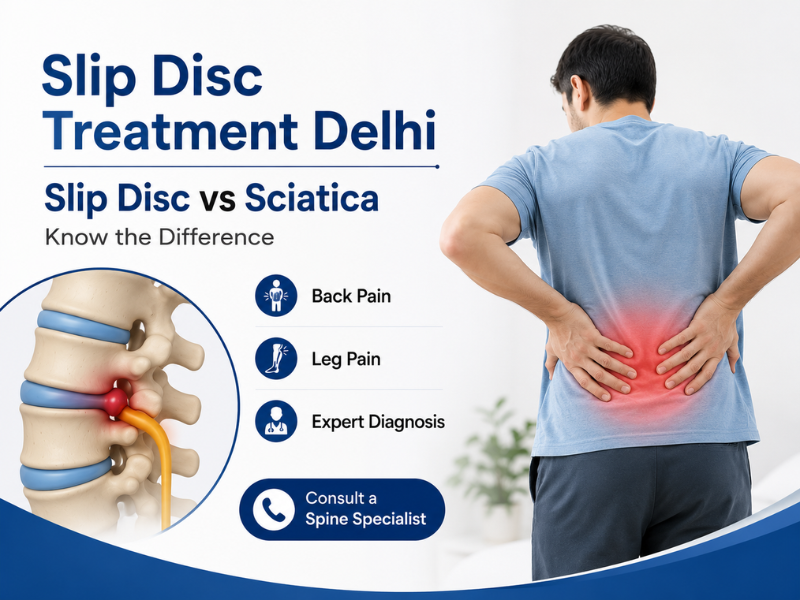
If you are searching for information about back pain that travels down your leg, you may have come across terms such as slipped disc and sciatica. Many people assume they are the same condition, but they are actually different. Understanding the difference can help you seek the right treatment at the right time.
At Riva Clinic, Dr. Tarush Rustagi, an experienced Spine Surgeon in Delhi, evaluates and treats patients suffering from persistent back pain, nerve-related leg pain, disc problems, and other spinal disorders using advanced diagnostic and treatment approaches.
What Is a Slip Disc?
A slip disc, also known as a herniated disc or prolapsed disc, occurs when the soft inner portion of a spinal disc pushes through a tear in the outer layer. This can irritate nearby nerves and lead to pain, numbness, or weakness.
Spinal discs act as cushions between the vertebrae. Over time, age-related wear and tear, injuries, or repetitive strain can damage these discs and cause them to bulge or rupture.
Common Causes of a Slipped Disc
- Age-related disc degeneration
- Poor posture
- Heavy lifting
- Sudden twisting movements
- Long hours of sitting
- Obesity
- Sports injuries
What Is Sciatica?
Sciatica is not a spinal condition itself. It is a group of symptoms that occur when the sciatic nerve becomes irritated or compressed.
The sciatic nerve runs from the lower back through the hips and buttocks and extends down each leg. Compression of this nerve can cause pain, tingling, numbness, or weakness that radiates down the leg.
Common Causes of Sciatica
- Herniated disc
- Spinal stenosis
- Degenerative disc disease
- Bone spurs
- Spinal injuries
- Spondylolisthesis
A slipped disc is one of the most common reasons people develop sciatica symptoms.
Slip Disc vs Sciatica: Understanding the Difference
The key difference is simple:
- A slipped disc is a structural problem affecting the spinal disc.
- Sciatica is a symptom caused by irritation of the sciatic nerve.
A person can have a slipped disc without developing sciatica. Similarly, sciatica may occur due to several spinal conditions, not just disc problems.
Symptoms of a Slip Disc
- Lower back pain
- Neck pain
- Numbness
- Tingling sensations
- Muscle weakness
- Reduced flexibility
Symptoms of Sciatica
- Pain radiating down one leg
- Burning sensation in the leg
- Numbness in the foot
- Difficulty standing for long periods
- Weakness in the affected leg
- Pain that worsens when sitting
When Should You See a Spine Specialist?
Many cases of back pain improve with rest and conservative treatment. However, certain symptoms should not be ignored.
Seek medical attention if you experience:
- Pain lasting longer than a few weeks
- Pain extending below the knee
- Persistent numbness
- Muscle weakness
- Difficulty walking
- Loss of balance
- Pain affecting daily activities
- Symptoms that continue to worsen
Early evaluation can help prevent long-term nerve damage and improve recovery outcomes.
How Are These Conditions Diagnosed?
A detailed assessment is important to identify the exact cause of symptoms.
Medical History
Your doctor will review:
- Location of pain
- Duration of symptoms
- Previous injuries
- Work and lifestyle habits
- Medical history
Physical Examination
The examination may include:
- Strength testing
- Reflex assessment
- Nerve evaluation
- Walking assessment
- Range of motion testing
Imaging Studies
Depending on your symptoms, your doctor may recommend:
- MRI scan
- X-rays
- CT scan
- Nerve conduction studies
MRI is often considered the most useful imaging test for identifying disc problems and nerve compression.
Treatment Options
Treatment depends on the underlying cause, symptom severity, and overall health of the patient.
Non-Surgical Treatment
Many patients improve without surgery.
Common treatment approaches include:
- Physical therapy
- Pain management medications
- Activity modification
- Posture correction
- Core strengthening exercises
- Weight management
Minimally Invasive Spine Surgery
When symptoms fail to improve despite conservative treatment, surgical intervention may be considered.
Modern minimally invasive procedures offer several benefits:
- Smaller incisions
- Less tissue disruption
- Faster recovery
- Reduced postoperative discomfort
- Shorter hospital stay
These procedures are designed to address the underlying spinal problem while helping patients return to their normal activities sooner.
Can a Slipped Disc Heal Without Surgery?
In many cases, symptoms improve with proper non-surgical management.
However, surgery may be recommended if:
- Significant nerve compression is present
- Progressive weakness develops
- Symptoms persist for months
- Daily activities become severely affected
- Conservative treatment fails
A spine surgeon can determine the most appropriate treatment based on clinical findings and imaging results.
Tips to Protect Your Spine
Maintaining good spinal health can reduce the risk of future problems.
Helpful habits include:
- Exercising regularly
- Maintaining healthy body weight
- Avoiding prolonged sitting
- Using proper lifting techniques
- Strengthening core muscles
- Improving posture
- Taking breaks during desk work
Simple lifestyle changes can have a significant impact on long-term spine health.
Why Choose Dr. Tarush Rustagi?
Dr. Tarush Rustagi specializes in the diagnosis and treatment of:
- Herniated discs
- Sciatica
- Chronic back pain
- Cervical spine disorders
- Spine endoscopy
- Microscopic spine surgery
- Minimally invasive spine surgery
At Riva Clinic, patients receive individualized treatment plans designed to address the root cause of their symptoms and support long-term recovery.
Book a Consultation
Persistent back pain and leg pain should never be ignored. Early diagnosis often leads to better treatment outcomes and faster recovery.
Visit:
https://rivaclinic.com/
Schedule a consultation with Dr. Tarush Rustagi for expert spine care and comprehensive evaluation of back pain, disc problems, and nerve-related conditions.
Frequently Asked Questions
What is the difference between a slipped disc and sciatica?
A slipped disc is a spinal condition, while sciatica refers to symptoms caused by irritation or compression of the sciatic nerve.
Can a slipped disc cause leg pain?
Yes. When a damaged disc compresses nearby nerves, pain may travel into the buttocks, thigh, calf, or foot.
Is surgery always necessary?
No. Many patients improve with conservative treatment such as physical therapy, medications, and lifestyle modifications.
How long does recovery take?
Recovery varies depending on the severity of the condition and the treatment approach used.
When should I see a spine surgeon?
You should seek specialist evaluation if symptoms persist, worsen, or cause weakness, numbness, or difficulty walking.
Can sciatica return after treatment?
Yes. Recurrence can occur if underlying spinal problems are not properly managed or preventive measures are not followed.