

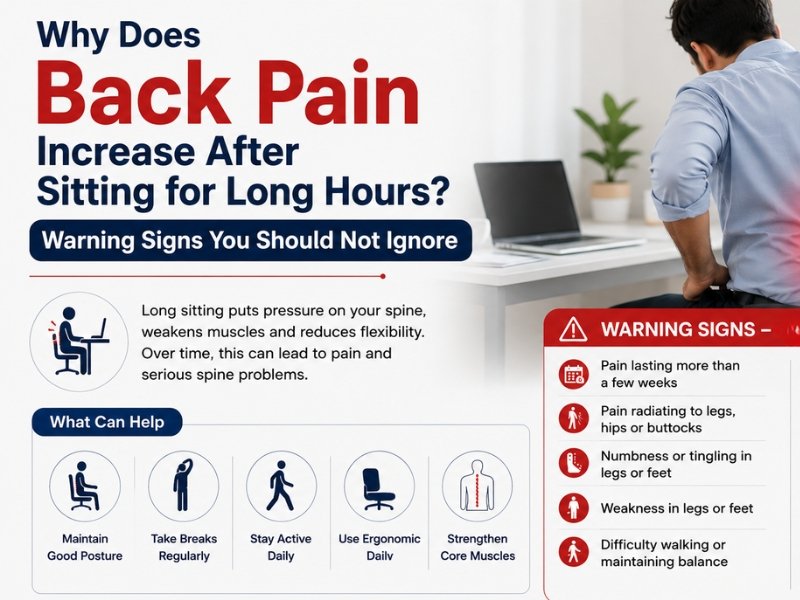
Modern lifestyles have made prolonged sitting a daily habit for many people. Office workers, students, drivers, and work-from-home professionals often spend several hours sitting continuously. As a result, many individuals experience stiffness, discomfort, and persistent back pain.
Initially, mild back pain may seem harmless. However, ignoring these symptoms for a long time can gradually affect spinal health. In some cases, discomfort may begin interfering with sleep, work performance, and daily activities.
According to Dr. Tarush Rustagi, prolonged sitting and poor posture are among the most common causes of spine-related discomfort seen in modern lifestyles.
Why Does Sitting for Long Hours Affect the Spine?
The human spine is designed for regular movement. However, sitting continuously for several hours increases pressure on the lower back and surrounding muscles.
As movement decreases, muscles become stiff and flexibility reduces. Additionally, blood circulation may slow down, which can increase discomfort around the back and neck.
People who commonly experience sitting-related back pain include:
- office professionals,
- students,
- drivers,
- gamers,
- and remote workers.
Therefore, maintaining proper posture and movement throughout the day becomes extremely important for spinal health.
Common Causes of Back Pain After Prolonged Sitting
Poor Sitting Posture
Poor posture is one of the leading causes of back pain. For example, slouching forward or bending the neck downward places additional stress on the spine.
Over time, poor posture may lead to:
- lower back pain,
- neck stiffness,
- shoulder tightness,
- and muscle fatigue.
Moreover, prolonged poor posture can gradually increase spinal strain and discomfort.
Weak Core and Back Muscles
Core muscles help support the spine during sitting, standing, and movement. However, long periods of inactivity may weaken these muscles over time.
As a result, spinal support decreases and posture-related discomfort becomes more common.
Weak muscles may increase the risk of:
- recurring back pain,
- poor posture,
- and long-term spinal stress.
Therefore, regular physical activity is important for maintaining spine stability.
Reduced Flexibility and Movement
Sitting in one position for extended periods can reduce flexibility around the hips, hamstrings, and lower back.
Consequently, many people notice stiffness while:
- standing,
- bending,
- walking,
- or getting up after sitting for long hours.
Furthermore, reduced flexibility may gradually affect mobility and comfort during daily activities.
Increased Pressure on the Lower Spine
Continuous sitting increases pressure on the lumbar spine. In addition, poor posture may place extra stress on spinal discs and nearby structures.
Over time, this increased pressure may contribute to:
- chronic back pain,
- nerve irritation,
- and disc-related discomfort.
Therefore, taking regular breaks during work hours becomes essential.
Incorrect Workstation Setup
An uncomfortable chair or poor desk setup may also affect spine health. For instance, improper screen height or lack of back support can increase strain on the neck and lower back.
Common ergonomic mistakes include:
- improper chair height,
- unsupported lower back,
- screen positioned too low,
- and sitting continuously without breaks.
Fortunately, small ergonomic improvements can significantly improve sitting comfort.
Warning Signs You Should Not Ignore
Mild back pain may improve with rest and posture correction. However, some symptoms should never be ignored.
You should consult a spine specialist if you experience:
- pain lasting several weeks,
- pain radiating to the legs,
- numbness or tingling,
- worsening pain while sitting,
- difficulty walking,
- or weakness in the legs.
Importantly, early evaluation may help identify the underlying cause before symptoms worsen further.
How to Reduce Back Pain from Long Sitting Hours
Maintain Correct Sitting Posture
Firstly, sit with:
- your back supported,
- shoulders relaxed,
- feet flat on the floor,
- and screen positioned at eye level.
At the same time, avoid slouching for prolonged periods.
Take Regular Movement Breaks
Experts often recommend standing and stretching every 30–45 minutes. Even short walking breaks may help reduce stiffness and improve circulation.
Additionally, movement helps relax spinal muscles and improves flexibility.
Stay Physically Active
Regular physical activity supports better spine health. Activities such as:
- walking,
- stretching,
- yoga,
- and swimming
may help improve posture, flexibility, and muscle strength.
Therefore, maintaining an active lifestyle can help reduce sitting-related discomfort.
Strengthen Core Muscles
Exercises focusing on the abdomen and lower back can improve spinal support. Moreover, strong core muscles help reduce pressure on the spine during long sitting hours.
As a result, posture and balance may improve over time.
Improve Workstation Ergonomics
Using a supportive chair and proper desk setup can help reduce strain on the neck and lower back.
Similarly, adjusting screen height and sitting position may improve comfort during working hours.
Can Long Sitting Hours Lead to Serious Spine Problems?
In some individuals, prolonged sitting combined with poor posture may contribute to:
- chronic lower back pain,
- neck pain,
- sciatica,
- muscle imbalance,
- and disc-related issues.
Although not every individual develops severe spine problems, ignoring persistent symptoms may gradually increase discomfort.
Therefore, early attention to posture and spinal health is extremely important.
When Should You Consult a Spine Specialist?
Medical evaluation may be necessary if:
- pain keeps returning,
- daily activities become difficult,
- sitting increases discomfort,
- or pain spreads to the legs.
Additionally, persistent symptoms should never be ignored, especially when they begin affecting mobility or sleep.
Expert Spine Care in Delhi
Dr. Tarush Rustagi provides comprehensive evaluation and spine care for various back and neck-related conditions.
At Riva Clinic, the focus remains on patient education, accurate diagnosis, and personalized spine care.
Frequently Asked Questions
Is back pain after sitting common?
Yes, prolonged sitting and poor posture commonly contribute to stiffness and back discomfort.
Can poor posture affect spinal health?
Yes, poor posture may gradually increase stress on the spine and surrounding muscles.
How often should I take breaks while working?
Generally, experts recommend standing or stretching every 30–45 minutes.
When should I worry about back pain?
You should seek medical advice if pain is associated with numbness, weakness, or leg pain.
Can exercise help reduce sitting-related back pain?
Yes, regular physical activity may help improve flexibility, posture, and muscle strength.
Conclusion
Long sitting hours can gradually affect spinal health and increase the risk of persistent back pain. However, maintaining proper posture, staying physically active, and taking regular movement breaks may help reduce discomfort.
Most importantly, recognizing warning signs early can help prevent long-term spinal problems. If back pain continues to affect your routine, timely medical guidance may help identify the cause and support better spine health.