
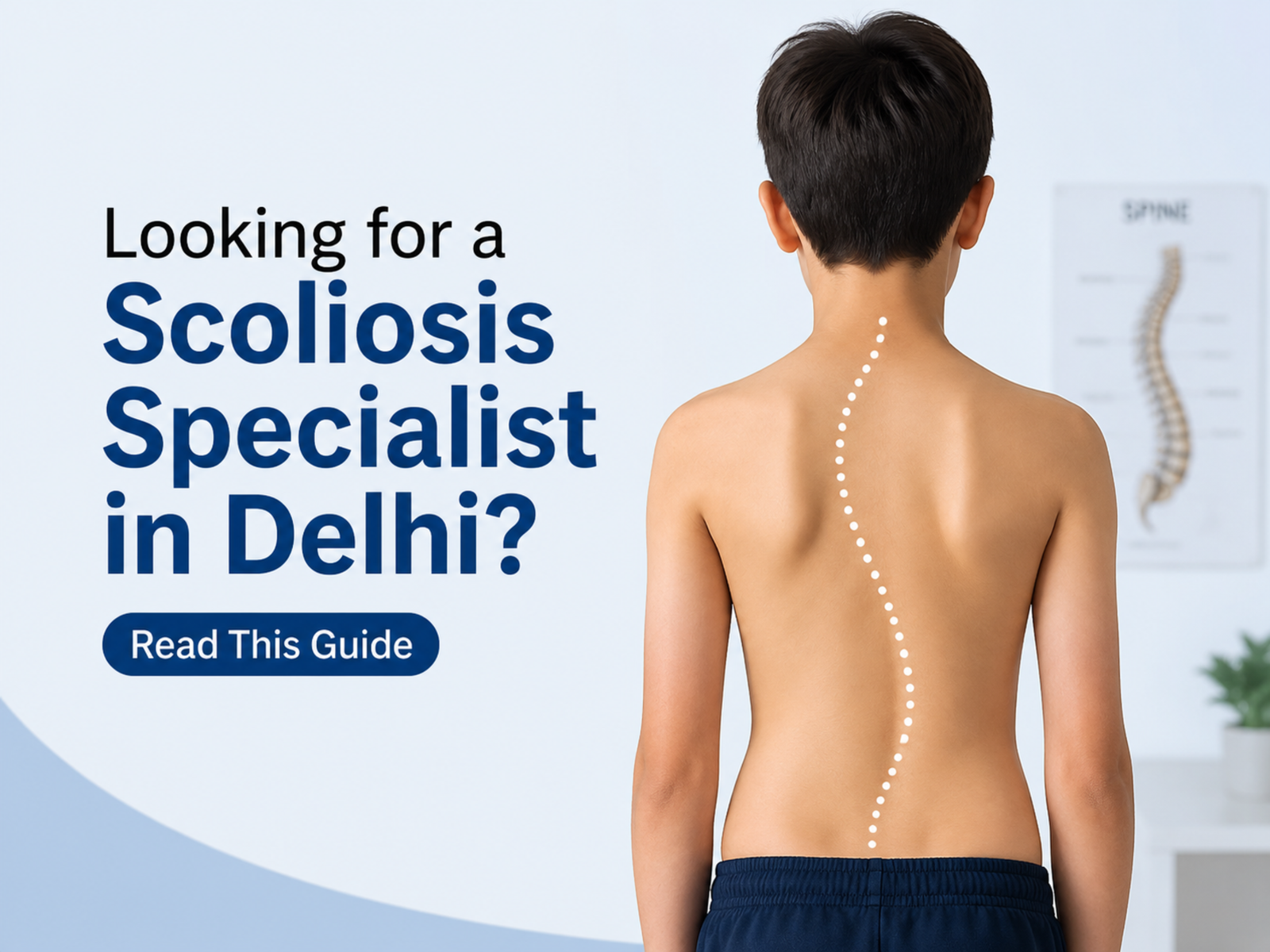
Scoliosis is a condition in which the spine develops an unusual sideways curve. It can affect children, teenagers, and adults. In some people, scoliosis may be mild and may not cause noticeable symptoms. In other cases, the curve can become more visible and may affect posture, movement, or daily activities.
If you are looking for scoliosis treatment in Delhi, it is important to understand that every spinal curve is different. The right treatment depends on factors such as age, the size and location of the curve, symptoms, physical development, and whether the curve is changing over time.
At Riva Clinic, Dr. Tarush Rustagi provides evaluation and treatment guidance for scoliosis and other spine conditions. The treatment approach is planned according to the individual patient’s condition and needs.
What Is Scoliosis?
Scoliosis is a condition in which the spine curves sideways instead of following a relatively straight alignment.
The curve may develop during childhood or become more noticeable during the teenage growth years. Scoliosis can also occur in adults because of age-related changes in the spine, previous spinal conditions, or other causes.
Not every spinal curve requires surgery. Some people may only need regular monitoring, while others may require non-surgical treatment or surgery depending on the severity and progression of the condition.
What Are the Common Symptoms of Scoliosis?
Scoliosis does not always cause pain, especially in children and teenagers. Sometimes, parents or patients first notice a change in posture.
Common signs may include:
- Uneven shoulders
- One shoulder appearing higher than the other
- Uneven hips
- One side of the back appearing more prominent
- Clothes fitting unevenly
- A visible sideways curve in the spine
- Changes in posture
- Back pain, especially in some adults
- Difficulty with certain movements in more advanced cases
In children and teenagers, scoliosis may become more noticeable during periods of rapid growth. A persistent change in posture should be evaluated by a qualified doctor rather than assumed to be a normal part of growth.
What Causes Scoliosis?
There is no single cause for every case of scoliosis.
Some common types include:
Idiopathic Scoliosis
This is the most common type, especially in children and teenagers. The exact cause may not be known.
Congenital Scoliosis
This develops because of differences in the formation of the spine before birth.
Degenerative Scoliosis
This may develop in adults because of changes in the spinal discs and joints as the spine ages.
Neuromuscular Scoliosis
This can be associated with certain conditions affecting the muscles or nervous system.
A proper medical evaluation is important to understand the possible cause and severity of scoliosis.
How Is Scoliosis Diagnosed?
Scoliosis diagnosis usually begins with a detailed medical history and physical examination.
A spine specialist may check:
- Shoulder and hip alignment
- Posture
- Spine movement
- Back symmetry
- Muscle strength
- Nerve function
- Walking pattern
The doctor may also recommend imaging tests when needed. X-rays can help measure the spinal curve and understand its location and severity.
In some cases, additional imaging such as an MRI may be recommended, especially when there are unusual symptoms, significant pain, or concerns about nerves or other spinal structures.
The diagnosis should consider the patient’s age, symptoms, physical examination, and imaging findings together.
Does Every Person With Scoliosis Need Treatment?
No.
This is an important point for patients and parents to understand.
Some people with mild scoliosis may only need observation and regular follow-up. Others may need active treatment depending on the severity of the curve and whether it is progressing.
In children and teenagers, treatment decisions may also depend on how much growth is remaining.
At Riva Clinic, scoliosis evaluation focuses on understanding the patient’s individual condition before deciding on an appropriate treatment approach.
What Are the Treatment Options for Scoliosis?
The treatment for scoliosis depends on the severity and type of the curve, age, symptoms, and progression.
Observation and Regular Monitoring
Mild scoliosis may not require immediate active treatment.
The doctor may recommend regular examinations and imaging when appropriate to monitor whether the spinal curve is changing.
This approach can be particularly important for children and teenagers who are still growing.
Physiotherapy and Exercise
Physiotherapy may be recommended for selected patients.
Exercises can help improve posture, flexibility, muscle strength, and overall physical function. The exact exercises should be selected according to the patient’s condition.
Exercise should not be treated as a replacement for medical evaluation when a significant spinal curve is present.
Bracing
For some growing children and teenagers with scoliosis, a spinal brace may be recommended.
The purpose of bracing is generally to help control progression of the curve while the child continues to grow.
Not every child with scoliosis needs a brace. The decision depends on factors such as age, growth stage, and the characteristics of the spinal curve.
Surgery for Scoliosis
Surgery may be considered for selected patients with significant or progressive spinal deformity, particularly when other treatment approaches are not appropriate or sufficient.
Scoliosis surgery is a major decision and requires detailed evaluation.
The surgical approach depends on the type and severity of the curve, the patient’s age, overall health, and other spinal factors.
At Riva Clinic, Dr. Tarush Rustagi provides spine care that includes deformity correction and advanced spine surgery when clinically appropriate. Riva Clinic also provides minimally invasive and endoscopic spine services for selected spinal conditions.
Scoliosis in Children and Teenagers
Parents may notice scoliosis when a child is growing quickly.
Some signs that may need medical evaluation include:
- Uneven shoulders
- Uneven hips
- A visible curve in the back
- One shoulder blade appearing more prominent
- Clothes hanging unevenly
- A change in standing posture
Scoliosis may not cause pain in children, so waiting for pain before seeking an evaluation may not be the best approach.
If you notice a persistent change in your child’s posture or back shape, a spine specialist can evaluate the condition and explain whether observation or treatment is required.
Scoliosis in Adults
Adult scoliosis can have different causes and may sometimes be associated with back pain, stiffness, or changes in posture.
Some adults may have had scoliosis since childhood, while others may develop spinal curvature because of age-related changes.
Treatment depends on the cause and symptoms.
Non-surgical care may be considered when appropriate. In more complex cases, surgery may be discussed after a detailed assessment.
When Should You See a Spine Specialist for Scoliosis?
Consider consulting a spine specialist if you notice:
- A visible curve in the spine
- Uneven shoulders or hips
- Persistent changes in posture
- Back pain associated with a spinal curve
- Numbness or weakness
- Difficulty walking or performing normal activities
- A scoliosis diagnosis that appears to be progressing
Early evaluation can help patients understand the condition and avoid unnecessary delay in treatment when medical care is required.
Scoliosis Treatment in Delhi at Riva Clinic
If you are searching for scoliosis treatment in Delhi, choosing a doctor who evaluates the complete condition is important.
At Riva Clinic, Dr. Tarush Rustagi provides personalized spine care for different spinal conditions, including scoliosis and spinal deformities.
The evaluation may include understanding your symptoms, medical history, physical examination, and imaging reports. Based on the findings, the doctor can explain whether observation, physiotherapy, bracing, or surgical treatment may be appropriate.
Riva Clinic provides specialized spine care in Pitampura, Delhi, with services including spine surgery, minimally invasive spine surgery, spine endoscopy, microscopic spine surgery, and treatment for spinal deformities.
Frequently Asked Questions
1. Can scoliosis be treated without surgery?
Yes. Some people with scoliosis may be managed with observation, physiotherapy, exercises, or bracing depending on their age and condition. Surgery is considered only for selected cases.
2. Does scoliosis always cause back pain?
No. Scoliosis, especially in children and teenagers, may not cause pain. A visible change in posture or spinal alignment can be an important sign.
3. Can scoliosis get worse with age?
It can progress in some people, but the risk depends on factors such as the size and type of the curve, age, growth stage, and other spinal changes. Regular evaluation can help monitor the condition.
4. Is scoliosis common in children and teenagers?
Scoliosis can develop during childhood or adolescence, particularly during periods of rapid growth. Parents may first notice uneven shoulders, hips, or a change in the shape of the back.
5. When is scoliosis surgery needed?
Surgery may be considered for selected patients with significant or progressive spinal deformity. The decision depends on the spinal curve, symptoms, age, overall health, and other clinical findings.
6. Which doctor treats scoliosis in Delhi?
A spine specialist or spine surgeon can evaluate scoliosis and explain the available treatment options. Dr. Tarush Rustagi at Riva Clinic provides evaluation and treatment guidance for scoliosis and other spine conditions in Delhi.
Get Expert Evaluation for Scoliosis in Delhi
A change in spinal alignment should not be ignored, especially in a growing child or teenager. Early evaluation can help identify the type and severity of scoliosis and determine whether monitoring or treatment is required.
If you are looking for scoliosis treatment in Delhi, consult Dr. Tarush Rustagi at Riva Clinic for a detailed spine evaluation and personalized treatment plan.
Riva Clinic
AD 35 A, Tower Apartments, Pitampura, Delhi – 110034
Phone: +91 93113-41151
Website: https://rivaclinic.com/
Visit Riva Clinic to learn more about scoliosis, spine deformity treatment, minimally invasive spine surgery, and other spine care services.