

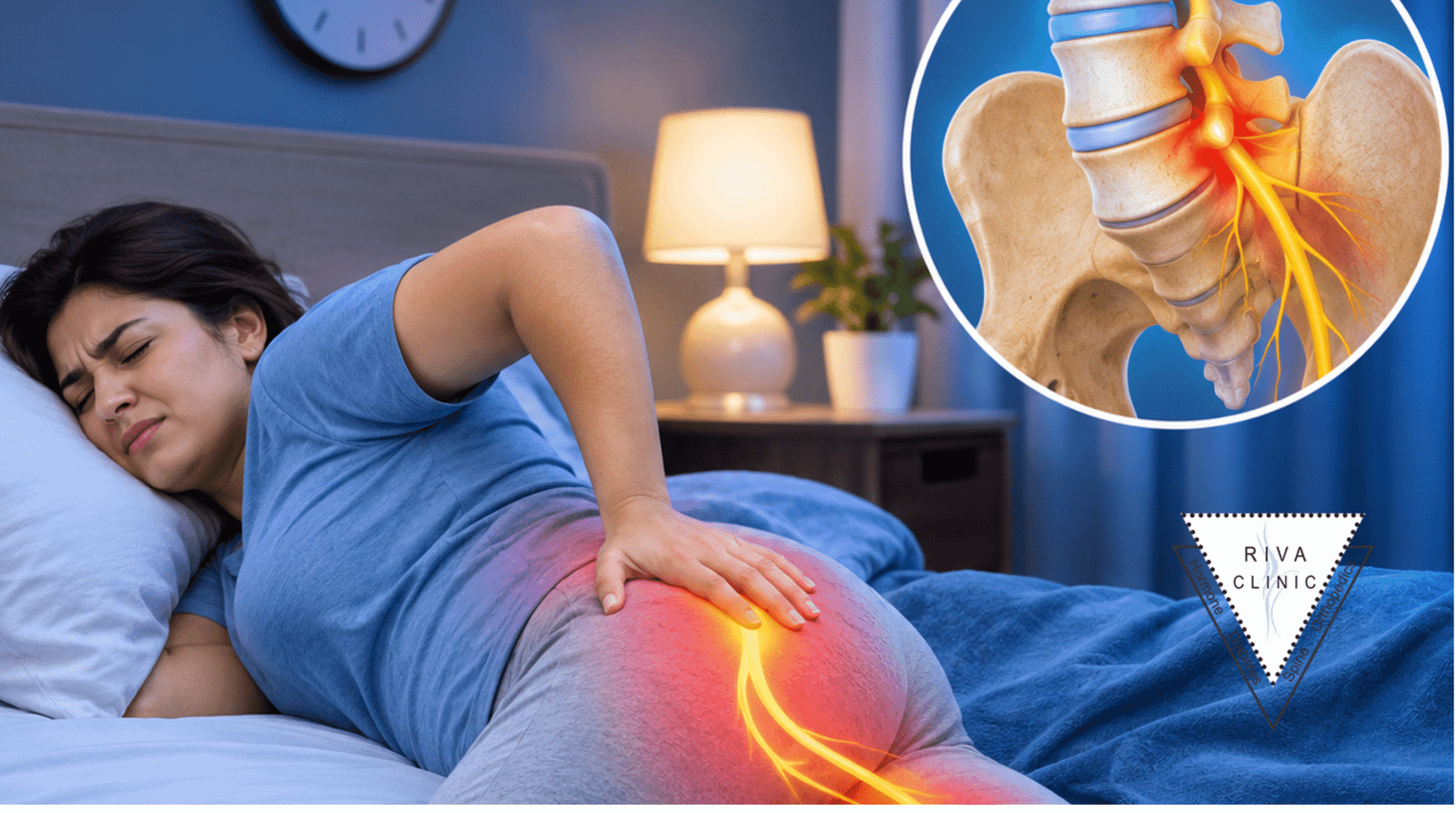
Sciatica pain can make it difficult to fall asleep, stay comfortable, or even turn over in bed. Many people experience increased lower back, hip, and leg pain at night, especially when lying in one position for too long. This discomfort can affect sleep quality and make everyday activities more difficult.
But why does sciatica pain get worse at night? Is it because of your sleeping position, a slipped disc, or pressure on the sciatic nerve?
Sciatica occurs when the sciatic nerve becomes irritated or compressed, often due to a herniated disc or changes in the spine. The good news is that most people improve with appropriate treatment, physical activity, and medical guidance.
In this blog, we will explain the common causes of nighttime sciatica pain, comfortable sleeping positions, and treatments that can help manage the condition.
What Is Sciatica Pain?
Sciatica is a condition in which pain travels along the sciatic nerve, which starts in the lower back and passes through the hips and buttocks into the legs.
It usually affects one side of the body and can cause symptoms such as:
- Sharp or shooting pain from the lower back to the leg.
- Burning or electric shock-like sensations.
- Tingling or pins and needles in the feet.
- Numbness in the leg or toes.
- Muscle weakness in the affected leg.
The pain may become more noticeable while sitting, bending, coughing, or changing sleeping positions.
Why Does Sciatica Pain Get Worse at Night?
Sciatica pain at night can happen for several reasons. Your sleeping posture, nerve irritation, and reduced movement during sleep may all contribute to discomfort.
1. Sleeping Position Can Increase Nerve Pressure
Certain sleeping positions may increase pressure or tension around the lower back and irritated nerve roots. For example, sleeping on your stomach can place additional strain on the spine.
If your spine is not comfortably supported, you may experience more pain when lying down.
2. Inflammation and Nerve Irritation
A herniated disc or other spinal condition can irritate nearby nerve roots. This irritation may cause shooting pain, tingling, or burning sensations that become more noticeable when you are resting.
3. Staying in One Position for Too Long
During sleep, you may remain in the same position for several hours. Limited movement can increase stiffness and discomfort, particularly if your back and leg are already sensitive.
4. Poor Mattress or Pillow Support
A mattress that does not provide comfortable support may contribute to back discomfort. Similarly, an unsuitable pillow position can affect the alignment of your neck and spine.
However, there is no single mattress type that works for everyone.
5. Underlying Spinal Conditions
Conditions such as a slipped disc, spinal stenosis, or spondylolisthesis can irritate or compress nerve roots. If the underlying problem is not properly managed, nighttime pain may continue.
Important: Severe, persistent pain that is worse at night or occurs even when resting should be medically assessed. It should not automatically be assumed to be ordinary sciatica.
Best Sleeping Positions for Sciatica Pain Relief
Choosing a comfortable sleeping position may help reduce pressure on your lower back and improve sleep quality.
1. Sleep on Your Side With a Pillow Between Your Knees
Lie on your side and place a pillow between your knees. This can help keep your hips and pelvis in a more comfortable position.
2. Sleep on Your Back With a Pillow Under Your Knees
If you prefer sleeping on your back, place a pillow under both knees. This may reduce tension in your lower back and make resting more comfortable.
3. Avoid Sleeping on Your Stomach
Sleeping on your stomach may increase strain on the lower back and neck. If this position increases your symptoms, try sleeping on your side or back instead.
Remember, the best sleeping position is the one that reduces your symptoms. Change positions if a particular posture increases pain.
Which Treatments Actually Work for Sciatica Pain?
The right treatment depends on the cause, severity, and duration of symptoms. A proper clinical assessment helps identify the source of nerve irritation and determine the most suitable treatment.
1. Physiotherapy and Guided Exercises
Physiotherapy can help improve movement, strength, and flexibility. A physiotherapist may recommend exercises based on your symptoms and physical condition.
These may include:
- Gentle back and leg mobility exercises.
- Core strengthening activities.
- Nerve mobility exercises when appropriate.
- Posture and movement training.
Avoid aggressive stretching or exercises that increase shooting leg pain.
2. Medication for Pain Management
A doctor may recommend suitable medication to manage pain and inflammation, depending on your medical history and symptoms.
Not all pain medicines are effective for sciatica, and some medicines can have side effects. Avoid taking prescription medicines or muscle relaxants without medical advice.
3. Heat or Cold Therapy
Applying a wrapped heat pack or cold pack may provide temporary relief. Heat can help relax tight muscles, while cold may help soothe painful areas.
Avoid applying extreme temperatures directly to your skin.
4. Image-Guided Injections
For selected patients with severe or persistent nerve-related pain, a specialist may consider an epidural steroid injection.
It may provide short-term pain relief in some cases, but it does not correct every underlying spinal problem. The benefits and risks should be discussed with a specialist.
5. Minimally Invasive Spine Surgery
When symptoms remain severe despite appropriate non-surgical treatment, or when significant nerve compression causes progressive weakness, surgery may be considered.
Depending on the diagnosis, options may include:
- Microdiscectomy: Removal of the portion of a herniated disc pressing on a nerve.
- Endoscopic spine surgery: A minimally invasive approach used for selected spinal conditions.
- Spinal decompression surgery: Removal of structures that are putting pressure on spinal nerves.
Surgery is not necessary for everyone with sciatica. The decision depends on examination findings, imaging when indicated, and the patient’s symptoms.
When Should You See a Spine Specialist?
Occasional discomfort may improve with appropriate self-care, but persistent or worsening symptoms should not be ignored.
Consult a spine specialist if:
- Sciatica pain continues for several weeks.
- Leg pain interferes with sleep or daily activities.
- You experience repeated numbness or tingling.
- Pain travels from your lower back to your foot.
- You notice weakness in your leg or difficulty walking.
Seek emergency medical attention immediately if you develop new numbness around the genitals or anus, difficulty passing urine, loss of bladder or bowel control, or severe or rapidly worsening weakness in both legs. These symptoms may indicate cauda equina syndrome, which requires urgent assessment.
How Can You Prevent Sciatica Pain From Returning?
Although sciatica cannot always be prevented, certain habits may help support spinal health:
- Stay physically active with regular, suitable exercise.
- Avoid sitting in one position for long periods.
- Maintain a comfortable posture while working.
- Use safe lifting techniques.
- Follow your physiotherapist’s exercise recommendations.
- Maintain a healthy body weight where appropriate.
- Take regular breaks during long journeys or desk work.
Consistency is important. Gradually improving strength and movement is generally more helpful than complete bed rest.
Get Expert Care for Sciatica Pain at Riva Clinic, Pitampura
Nighttime sciatica pain can affect your sleep, mobility, and quality of life. Finding the underlying cause is the first step towards effective treatment.
At Riva Clinic, Pitampura, Delhi, Dr. Tarush Rustagi, Consultant Spine Surgeon, provides specialist care for spinal conditions. Depending on the diagnosis, patients can receive guidance about appropriate treatment options, including minimally invasive and endoscopic spine procedures.
If lower back pain, shooting leg pain, or numbness is disturbing your sleep, consider getting a professional assessment rather than relying only on temporary pain relief.
Book your consultation at Riva Clinic today and take the first step towards better spinal health.
Clinic Address: AD 35 A, Tower Apartments, Pitampura, Near Power House, Outer Ring Road, Entry from Gate No. 1, Service Lane, Delhi – 110034.
Phone: +91 93113-41151 | +91 70421-41515
Email: contact@rivaclinic.com
Website: https://rivaclinic.com/
Frequently Asked Questions (FAQs)
1. Why does sciatica pain get worse at night?
Sciatica pain may feel worse at night due to sleeping posture, prolonged periods in one position, and irritation of the spinal nerve roots. An underlying spinal condition may also contribute to nighttime discomfort.
2. What is the best sleeping position for sciatica?
Sleeping on your side with a pillow between your knees or on your back with a pillow under your knees may improve comfort. Choose the position that reduces your symptoms.
3. Can a slipped disc cause sciatica pain at night?
Yes. A herniated or slipped disc can press against a nearby nerve root and cause pain that travels from the lower back into the buttocks and leg. The discomfort may also disturb sleep.
4. Does walking help reduce sciatica pain?
Gentle walking may help maintain mobility and prevent stiffness. However, the distance and activity level should depend on your symptoms. Stop and seek medical advice if walking causes worsening weakness or severe pain.
5. When does sciatica require surgery?
Surgery may be considered when severe symptoms continue despite appropriate non-surgical treatment or when significant nerve compression causes progressive weakness. A spine specialist determines whether surgery is appropriate after a detailed assessment.