

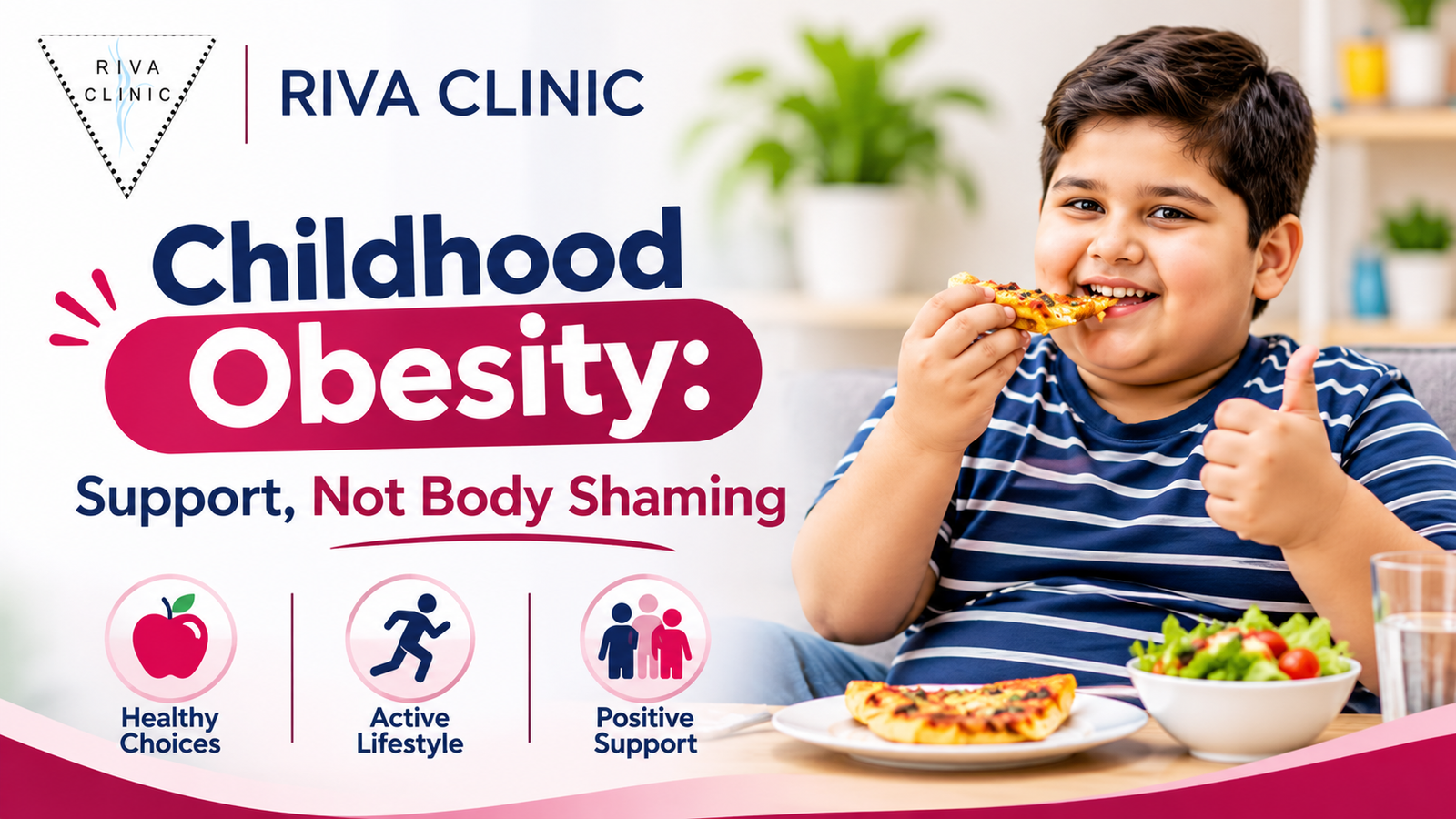
Childhood obesity is becoming an important health concern for parents. Many children experience changes in weight during their growing years, but excessive weight gain should not be ignored. At the same time, parents must understand that a child’s weight is not a measure of their discipline, habits, or self-worth.
Statements such as “You are overweight because you are lazy” can negatively affect a child’s confidence and emotional well-being. Instead of blaming children, parents should focus on understanding the reasons behind weight gain and creating a healthy environment at home.
Childhood obesity is a multifactorial condition. Genetics, family history, eating habits, physical activity, sleep patterns, hormonal factors, and emotional health can all influence a child’s weight.
The goal should not be to make children lose weight quickly. It should be to support healthy growth, better nutrition, physical fitness, and long-term well-being.
At Riva Clinic, Pitampura, Delhi, Dr. Vaishakhi Rustagi provides pediatric and adolescent endocrinology care to help parents understand children’s growth and hormone-related health concerns.
What Is Childhood Obesity?
Childhood obesity is a medical condition in which a child has excess body fat that may affect their overall health and development.
Unlike adults, children’s bodies are continuously growing and changing. Therefore, their weight should not be evaluated using adult BMI categories.
Doctors generally assess a child’s:
- Age and gender
- Height and weight
- BMI-for-age percentile
- Growth pattern over time
- Waist circumference, when appropriate
- Family and medical history
In India, healthcare professionals may use Indian Academy of Pediatrics (IAP) growth charts to assess children and adolescents.
A single weight measurement cannot provide a complete picture of a child’s health. Proper growth assessment helps determine whether the child needs lifestyle guidance, medical evaluation, or further investigation.
What Are the Common Causes of Childhood Obesity?
Childhood obesity rarely develops because of one reason. Several biological, environmental, and lifestyle factors can contribute to excessive weight gain.
1. Genetic and Family Factors
Genetics can influence body composition, appetite, metabolism, and how the body stores fat. Children may also develop eating and activity habits similar to other family members.
A family history of obesity does not mean a child will necessarily develop obesity, but it can increase the risk.
2. Unhealthy Eating Habits
Frequent consumption of processed foods, sugary drinks, packaged snacks, fried foods, and large portions can contribute to excessive calorie intake.
Children need balanced nutrition for proper development. Regular meals containing vegetables, fruits, whole grains, pulses, dairy products, and suitable protein sources can support healthy growth.
3. Lack of Physical Activity
Increased screen time, prolonged sitting, and limited outdoor play can reduce daily physical activity.
Children benefit from activities such as cycling, swimming, dancing, running, walking, and outdoor games. Physical activity should be enjoyable rather than a punishment for gaining weight.
4. Poor Sleep Patterns
Sleep plays an important role in regulating appetite, energy levels, and metabolism.
Insufficient or disturbed sleep may affect hormones involved in hunger and fullness. Children should maintain consistent sleeping routines according to their age.
5. Hormonal and Medical Factors
Certain hormonal conditions, medications, and medical problems may influence weight.
Conditions involving the thyroid, cortisol, or other metabolic processes can sometimes contribute to weight changes. However, hormonal disorders are not responsible for most cases of childhood obesity.
Parents should consult a specialist if excessive weight gain occurs along with slow height growth or other unusual symptoms.
For more information, read our related guide: Obesity in Children: How Hormones Affect Weight and When to Consult a Pediatric Endocrinologist.
Why Should Parents Avoid Body Shaming?
Children are sensitive to the words and reactions of adults around them. Repeated comments about their body shape, weight, or appearance can affect their confidence and relationship with food.
Body shaming may contribute to:
- Low self-esteem and poor body image
- Anxiety and emotional stress
- Social isolation and fear of being judged
- Unhealthy eating behaviours
- Avoidance of physical activities
- Reduced confidence in social situations
Instead of saying, “You need to lose weight,” parents can encourage positive habits through supportive conversations.
For example, replace negative comments with:
- “Let’s play outside together.”
- “Let’s choose healthier snacks for everyone.”
- “Let’s make our family more active.”
- “Your health matters, and we are here to support you.”
Children need encouragement, not criticism. A positive family environment can help them develop healthier habits without feeling embarrassed about their bodies.
How Can Parents Support Healthy Weight Management?
Managing childhood obesity requires patience, consistency, and family participation. Parents should avoid strict dieting or forcing children to follow unrealistic routines.
Here are some practical ways to support healthy development.
1. Encourage Balanced Nutrition
Provide meals that include vegetables, fruits, whole grains, pulses, and protein-rich foods. Reduce frequent sugary drinks and highly processed snacks.
Avoid completely banning favourite foods. Instead, teach children about balanced eating and appropriate portions.
2. Make Physical Activity Enjoyable
Encourage children to participate in activities they enjoy. Outdoor games, cycling, swimming, dancing, and family walks can make movement a regular part of daily life.
For school-aged children and adolescents, WHO recommends an average of at least 60 minutes of moderate-to-vigorous physical activity daily across the week.
3. Maintain Healthy Sleep Habits
Create a regular bedtime routine and reduce screen exposure before sleeping. Adequate sleep supports physical development, concentration, and overall health.
4. Reduce Excessive Screen Time
Encourage breaks from television, mobile phones, computers, and gaming devices. Replace some screen time with outdoor activities, hobbies, reading, and family interaction.
5. Make Healthy Changes Together
Parents should participate in healthy lifestyle changes instead of making one child feel different from everyone else.
When the whole family follows healthier habits, children are more likely to maintain those habits over time.
When Should You Consult a Doctor for Childhood Obesity?
Parents should consider professional medical advice when a child experiences:
- Rapid or unexplained weight gain
- Continuous weight gain over several months
- Weight gain along with slower height growth
- Unusual tiredness or reduced physical activity
- Excessive hunger or frequent eating
- Dark, thickened skin around the neck or underarms
- Snoring or disturbed sleep
- Signs of early or delayed puberty
These symptoms do not automatically indicate a hormonal problem. However, they may require proper assessment.
A doctor may review the child’s growth chart, family history, nutrition, sleep, physical activity, and medical history. Depending on the findings, blood sugar, cholesterol, thyroid function, or liver-related tests may be recommended.
Not every child needs hormone tests or medication. Treatment should depend on the child’s individual health condition and medical evaluation.
Parents concerned about height, weight, or hormonal changes can also explore Child Growth Problems and When to Seek Expert Advice.
How Can a Pediatric Endocrinologist Help?
A pediatric endocrinologist specialises in hormonal and metabolic conditions affecting children and adolescents.
The specialist evaluates growth patterns, weight changes, puberty, and possible hormonal concerns to understand whether an underlying medical condition is contributing to the problem.
At Riva Clinic, Dr. Vaishakhi Rustagi provides pediatric and adolescent endocrinology consultations. The focus is on understanding each child’s health needs and recommending appropriate care.
Parents looking for professional guidance can learn more about Pediatric Endocrinology Care at Riva Clinic.
Frequently Asked Questions About Childhood Obesity
1. What are the main causes of childhood obesity?
Childhood obesity can develop due to several factors, including genetics, family eating habits, excessive calorie intake, lack of physical activity, poor sleep, and certain medical or hormonal conditions.
2. Can childhood obesity affect a child’s growth and development?
Yes. Childhood obesity may increase the risk of insulin resistance, type 2 diabetes, high blood pressure, fatty liver disease, joint problems, and sleep-related conditions. It can also affect emotional well-being. Early assessment helps identify potential health concerns.
3. How can parents prevent childhood obesity without making children feel ashamed?
Parents can encourage balanced meals, regular physical activity, adequate sleep, and reduced screen time. Healthy habits should be followed by the entire family. Avoid negative comments, comparisons, and strict weight-loss diets.
4. Does every overweight child need hormonal testing?
No. Most childhood obesity cases are not caused by hormonal disorders. Hormone testing is generally recommended when symptoms, growth patterns, or medical history suggest an underlying hormonal problem. A doctor can decide which investigations are necessary.
5. When should I consult a pediatric endocrinologist for childhood obesity?
Consider consulting a pediatric endocrinologist if your child has rapid weight gain, weight gain with slow height growth, unusual hunger, early-onset severe obesity, or other signs of hormonal problems. Early medical evaluation can help identify the cause and guide appropriate care.
Support Your Child’s Healthy Growth with Riva Clinic, Delhi
Every child deserves to grow up feeling healthy, confident, and supported. Childhood obesity should never become a reason to criticize, compare, or embarrass a child.
Remember, the goal is not simply weight reduction; it is healthy growth and better overall health.
If you are concerned about your child’s weight, growth pattern, or hormonal health, consult Dr. Vaishakhi Rustagi at Riva Clinic, Pitampura, Delhi.
Get professional guidance, understand your child’s health needs, and take the right steps towards a healthier future.
Book your consultation today.
Riva Clinic – Hormone & Spine Ortho
Phone: +91 93113-41151 | +91 70421-41515
Email: contact@rivaclinic.com
Website: https://rivaclinic.com/
Choose kindness. Encourage healthy habits. Support your child’s growth without shame.