
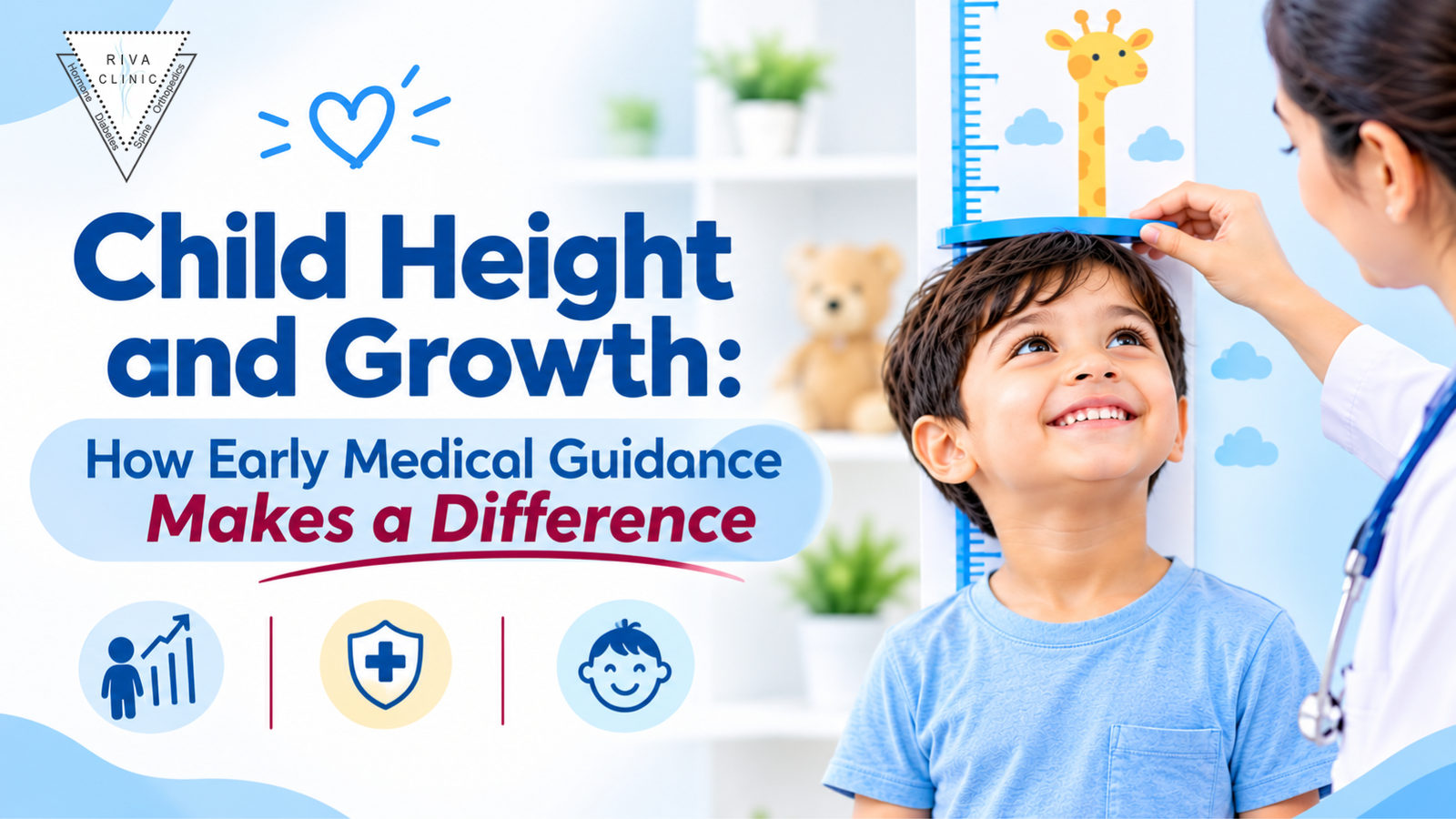
Every parent wants their child to grow healthy and reach their full growth potential. However, some parents become concerned when their child appears shorter than classmates or does not seem to be growing taller as expected.
Childhood growth is influenced by several factors, including genetics, nutrition, hormones, sleep, and overall health. While some children naturally grow at a slower pace, unusually slow height gain can sometimes indicate an underlying medical concern.
The important thing is to recognise changes early and seek medical guidance when needed. Early evaluation can help identify growth-related conditions and determine whether treatment or regular monitoring is required.
At Riva Clinic, Pitampura, Delhi, Dr. Vaishakhi Rustagi provides pediatric and adolescent endocrinology care for children with growth, height, and hormone-related concerns.
How Does Height Growth Happen in Children?
A child’s height increases as the bones grow in length. This process takes place through special areas of developing bones called growth plates.
Growth plates remain active during childhood and adolescence. Growth hormones, thyroid hormones, sex hormones, nutrition, and other health factors influence this process.
Children generally experience different growth phases:
- Infancy: Growth is usually rapid during the first years of life.
- Childhood: Height increases at a more steady pace.
- Puberty: A growth spurt usually occurs as the body develops.
- Late adolescence: Growth gradually slows as the growth plates mature and eventually close.
Once the growth plates close, natural height growth stops. This is one reason why timely assessment during childhood and adolescence matters.
What Factors Affect a Child’s Height and Growth?
Several factors influence how children grow. Understanding them helps parents recognise why every child has a different growth pattern.
1. Genetics and Family Height
Genetics plays an important role in determining a child’s expected adult height. Children with shorter parents may naturally have a shorter height than children with taller parents.
However, family height is only one part of the assessment. Doctors also consider the child’s growth rate, health, and development.
2. Nutrition and Balanced Diet
Children need sufficient nutrients to support bone development and overall growth.
A balanced diet should include:
- Protein-rich foods such as pulses, eggs, milk, and beans
- Calcium-rich foods for bone health
- Fruits and vegetables for vitamins and minerals
- Whole grains for energy
- Healthy fats in appropriate amounts
Poor nutrition or certain nutritional deficiencies may affect normal growth. However, no single food or supplement can guarantee an increase in height.
3. Hormonal Health
Hormones regulate several important growth processes.
Certain medical conditions, including growth hormone deficiency and hypothyroidism, may affect a child’s height development.
A pediatric endocrinologist can assess whether hormonal factors are contributing to slow growth.
4. Sleep and Physical Activity
Adequate sleep supports normal development and the body’s natural hormone cycles.
Regular physical activity, outdoor games, cycling, swimming, and age-appropriate exercise support strong bones and overall fitness.
Healthy habits contribute to normal development, but they cannot replace medical treatment when an underlying condition is present.
What Are the Warning Signs of Slow Growth in Children?
Parents should monitor their child’s height over time instead of comparing them only with other children.
Consider a medical assessment if you notice:
- Your child is significantly shorter than children of the same age.
- Height increases more slowly than expected.
- Your child moves down across height percentiles on a growth chart.
- Puberty starts unusually early or appears delayed.
- Your child has poor appetite, low energy, or unexplained weight changes.
- There is a noticeable difference between the child’s growth and the expected family growth pattern.
These signs do not automatically mean that a child has a growth disorder. Some children are naturally shorter and remain healthy.
However, a consistent slowing of height growth deserves medical attention.
For more information, read our related article: Is Your Child’s Growth Slowing Down? Growth Velocity Explained by a Pediatric Endocrinologist.
Why Is Early Medical Guidance Important for Child Height Growth?
Early medical guidance helps parents understand whether their child’s growth is normal or needs further investigation.
Here are some important reasons not to ignore persistent growth concerns.
1. Identifying the Underlying Cause
Slow height growth can sometimes be associated with hormonal conditions, nutritional problems, chronic illnesses, or genetic factors.
A specialist evaluation helps identify possible causes instead of relying on assumptions or home remedies.
2. Understanding the Child’s Growth Potential
Doctors assess the child’s current height, previous growth records, family height, and stage of puberty.
This information helps estimate the child’s growth pattern and identify whether further assessment is needed.
3. Assessing Growth Plates and Bone Age
A bone age X-ray, usually taken of the left hand and wrist, can help doctors understand how mature the bones are compared with the child’s actual age.
It may provide useful information about skeletal development and remaining growth potential. However, it cannot predict final adult height with complete accuracy.
4. Planning Treatment at the Right Time
If a medical condition is affecting growth, early diagnosis can help determine whether treatment is appropriate.
Some growth-related conditions may respond better when identified before the completion of puberty. The treatment plan depends on the diagnosis and the child’s individual needs.
How Does a Pediatric Endocrinologist Evaluate Height and Growth?
A pediatric endocrinologist specialises in hormonal and growth-related conditions affecting children and adolescents.
The evaluation may include the following steps:
1. Growth Chart Assessment: The doctor measures height and weight and compares them with age- and sex-appropriate growth charts. Previous measurements help assess growth velocity.
2. Family and Medical History: The doctor may ask about parental height, birth history, nutrition, previous illnesses, and the timing of puberty.
3. Physical Examination: The child’s overall development, body proportions, and signs of puberty may be assessed.
4. Bone Age Test: If required, an X-ray of the hand and wrist helps assess skeletal maturity.
5. Blood and Hormone Tests: Depending on the findings, investigations may include thyroid function, growth-related hormone assessment, or tests for other medical conditions.
Not every child needs all these tests. Investigations are selected according to the child’s symptoms and examination findings.
You can also explore Pediatric Endocrinology Treatment at Riva Clinic for more information about specialist evaluation.
Can Every Child Become Taller With Treatment?
No. Treatment cannot guarantee a particular height or make every child taller than their natural growth potential.
Some children are naturally short because of family genetics or normal variations in growth and puberty. They may not need medical treatment.
However, children with diagnosed conditions such as growth hormone deficiency or hypothyroidism may benefit from appropriate treatment.
Growth hormone therapy is recommended only for specific medical indications after specialist evaluation. It should never be used without a confirmed diagnosis and medical supervision.
Parents should avoid unverified height-increasing medicines, supplements, and online remedies.
How Can Parents Support Healthy Height Growth?
Parents can encourage healthy development through simple daily habits:
- Provide balanced meals with adequate protein and essential nutrients.
- Maintain a consistent sleep routine.
- Encourage regular outdoor activities and age-appropriate exercise.
- Attend routine health checkups and record height measurements.
- Avoid comparing the child’s height with siblings or classmates.
- Seek medical advice if growth appears slower than expected.
Remember, the goal is not to force height gain but to support healthy growth and development.
Frequently Asked Questions About Child Height and Growth
1. When should I worry about my child’s height?
Consider consulting a doctor if your child’s height growth slows, they fall across lower growth chart percentiles, or puberty appears unusually early or delayed. A growth assessment can help identify whether further evaluation is needed.
2. Which doctor should I consult for slow height growth?
A pediatric endocrinologist specialises in growth hormone, thyroid, puberty, and other hormonal conditions affecting children. They can assess growth patterns and recommend suitable investigations.
3. Can nutrition and exercise increase a child’s height?
Balanced nutrition, adequate sleep, and regular physical activity support normal growth. However, they cannot guarantee extra height beyond a child’s natural growth potential or treat an underlying hormonal condition.
4. What tests are used to check a child’s height growth?
Doctors may use growth charts, previous height measurements, bone age X-rays, and selected blood or hormone tests. The required investigations depend on the child’s symptoms and medical assessment.
5. Why is early treatment important for child growth problems?
Early evaluation can help identify conditions affecting growth while the child is still developing. When treatment is needed, timely diagnosis may provide more opportunities to manage the condition before growth plates close.
Support Your Child’s Healthy Growth with Riva Clinic, Delhi
Every child follows a different growth journey. However, persistent slow height gain, unusual growth patterns, or delayed puberty should not be ignored.
Early medical guidance can help identify possible growth concerns, understand the underlying cause, and plan appropriate care.
At Riva Clinic, Pitampura, Delhi, Dr. Vaishakhi Rustagi, Consultant Paediatric and Adolescent Endocrinologist, provides specialist evaluation for child height, growth disorders, thyroid conditions, puberty concerns, and hormonal health.
If you are concerned about your child’s height or growth rate, book a consultation and get professional guidance.
Take the first step towards understanding your child’s growth and supporting their healthy development.
Riva Clinic – Hormone & Spine Ortho
Phone: +91 93113-41151 | +91 70421-41515
Email: contact@rivaclinic.com
Website: https://rivaclinic.com/