
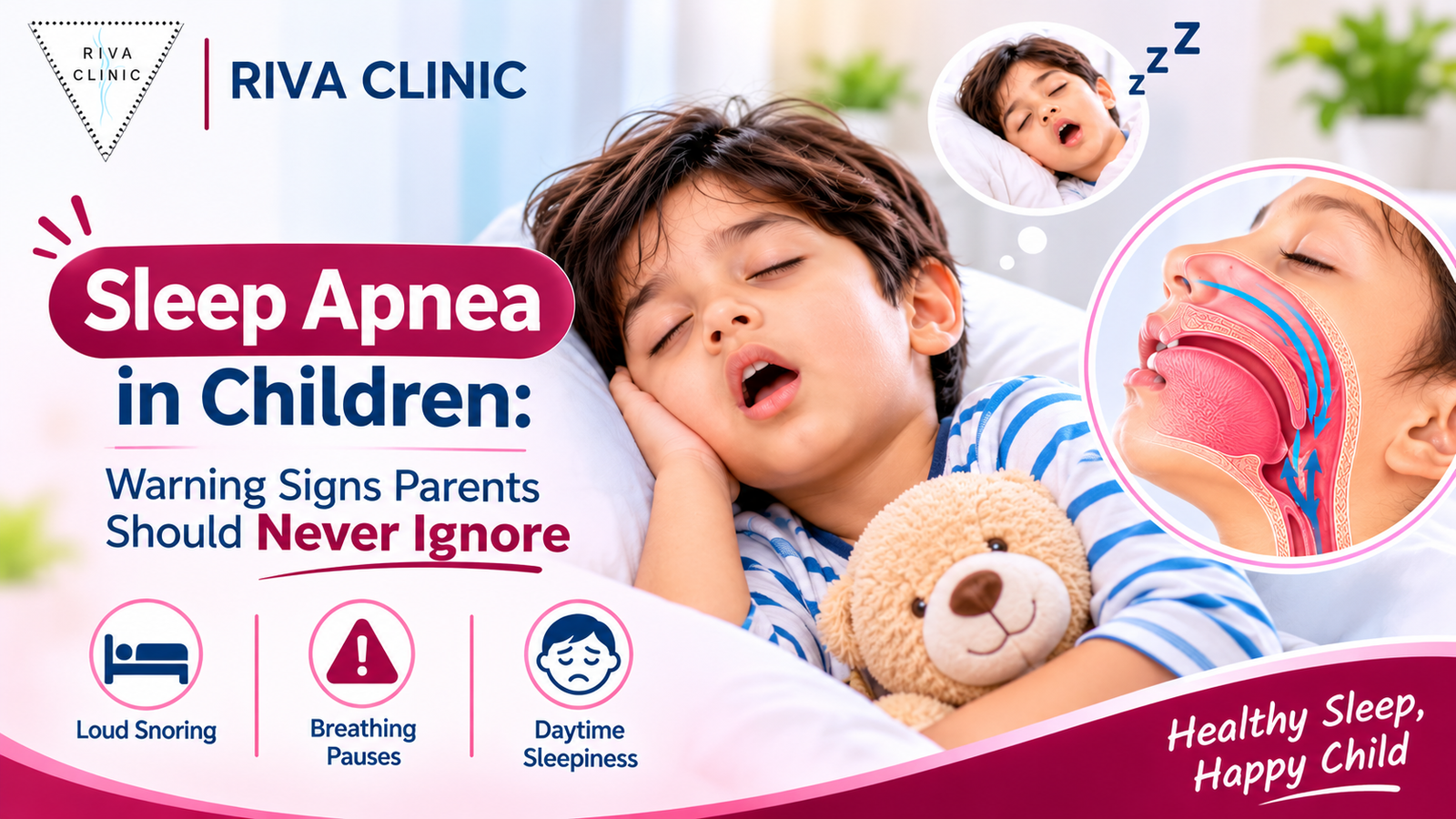
Does your child sleep for eight to ten hours but still wake up feeling tired? Do they snore loudly, breathe through their mouth, or suddenly gasp for air during sleep? These signs may indicate a condition called sleep apnea in children.
Many parents consider snoring normal, especially when children have a cold or blocked nose. However, regular snoring, interrupted breathing, and restless sleep should not be ignored. They may indicate a sleep-related breathing disorder that requires medical evaluation.
Childhood sleep apnea can affect sleep quality, behaviour, concentration, learning, and overall development. Early identification helps prevent complications and supports healthy growth.
Understanding the warning signs is the first step towards protecting your child’s health.
What Is Sleep Apnea in Children?
Sleep apnea is a sleep-related condition in which breathing repeatedly becomes partially or completely blocked during sleep.
The most common type in children is obstructive sleep apnea (OSA). It occurs when the upper airway becomes narrow or blocked while the child is sleeping.
During these episodes, breathing may become difficult or stop briefly. The brain may partially wake the child to restore normal breathing. This can happen several times throughout the night, disturbing the natural sleep cycle.
Unlike adults, children with sleep apnea may not always show obvious daytime sleepiness. Some children become unusually active, irritable, or restless because they are not getting good-quality sleep.
A child who sleeps for many hours does not necessarily get healthy sleep. The quality of breathing during sleep matters just as much as sleep duration.
What Are the Warning Signs of Sleep Apnea in Children?
Parents should observe their child’s sleeping habits carefully. Certain symptoms may indicate obstructive sleep apnea.
1. Loud and Frequent Snoring
Occasional snoring during a cold may not be serious. However, frequent or loud snoring, especially when it happens several nights a week, needs attention.
Regular snoring can indicate that air is moving through a narrowed airway.
2. Pauses in Breathing During Sleep
One of the important warning signs is when a child appears to stop breathing briefly and then suddenly starts breathing again.
Parents may notice:
- Sudden gasping for air
- Snorting sounds during sleep
- Repeated breathing pauses
- Choking-like sounds
- Restless movements during the night
These symptoms should be discussed with a healthcare professional.
3. Mouth Breathing
Children who regularly breathe through their mouths during sleep may have nasal obstruction, enlarged adenoids, enlarged tonsils, or other airway-related problems.
Persistent mouth breathing should be evaluated, particularly when it occurs with snoring.
4. Restless Sleep and Frequent Waking
Does your child change sleeping positions frequently, sweat excessively, or wake up several times at night?
Interrupted sleep can be associated with breathing difficulties. Some children may even sleep with their neck extended to make breathing easier.
5. Daytime Tiredness and Irritability
Poor sleep quality can affect a child’s mood and daily activities.
Parents may notice:
- Morning headaches
- Difficulty waking up
- Daytime tiredness
- Irritability or mood changes
- Reduced interest in activities
These symptoms may sometimes be mistaken for normal childhood behaviour.
6. Poor Concentration and School Performance
Sleep is essential for memory, learning, and brain development.
Children with untreated sleep apnea may experience difficulty concentrating, forgetfulness, behavioural changes, and reduced academic performance.
If your child is struggling with attention despite getting enough hours of sleep, their sleep quality may need evaluation.
What Causes Sleep Apnea in Children?
Several factors can contribute to childhood sleep apnea. The most common causes include:
Enlarged Tonsils and Adenoids
Enlarged tonsils and adenoids are among the most common causes of obstructive sleep apnea in children.
These tissues are located near the back of the throat and nasal passage. When they become enlarged, they can reduce the space available for airflow during sleep.
Childhood Obesity
Excess body weight can increase the risk of airway obstruction during sleep.
Children with obesity may have additional soft tissue around the upper airway, making breathing more difficult during sleep.
However, sleep apnea can also occur in children who are not overweight.
Nasal Blockage and Allergies
Allergic rhinitis, chronic nasal congestion, and other nasal problems can make breathing difficult.
Children with persistent nasal obstruction may develop mouth breathing and disturbed sleep.
Structural and Medical Factors
Certain facial or jaw structures, neuromuscular conditions, and other medical problems can increase the risk of sleep apnea.
A proper medical assessment helps identify the possible cause.
Can Sleep Apnea Affect a Child’s Growth and Development?
Yes. Untreated childhood sleep apnea can affect several areas of health.
Repeated sleep interruptions may interfere with the body’s normal sleep processes and overall development.
Possible complications include:
- Difficulty concentrating and learning
- Behavioural and emotional changes
- Poor sleep quality and daytime fatigue
- Increased risk of high blood pressure
- Problems with growth and development in some children
- Metabolic health concerns
Sleep also plays an important role in the normal release of growth hormone. Severe, untreated sleep disturbances may affect normal growth patterns.
Children experiencing poor growth along with sleep-related symptoms should receive an appropriate medical evaluation.
Parents can also read our guide on Child Growth Problems and When to Seek Expert Advice.
How Is Sleep Apnea Diagnosed in Children?
Sleep apnea cannot be confirmed through snoring alone. A proper medical evaluation is necessary.
The doctor may ask parents about the child’s sleeping habits, breathing patterns, medical history, and daytime behaviour.
Common evaluation methods include:
1. Physical Examination: The doctor may examine the child’s nose, throat, tonsils, and airway to identify possible obstructions.
2. Medical and Sleep History: Parents may be asked about snoring frequency, breathing pauses, sleep positions, daytime tiredness, and behavioural changes.
3. Overnight Sleep Study: Polysomnography is considered the standard test for diagnosing obstructive sleep apnea. It monitors breathing, oxygen levels, heart rate, brain activity, and other sleep-related measurements.
4. Additional Investigations: Depending on the symptoms, a specialist may recommend further airway or ENT evaluation.
Early diagnosis helps doctors understand the severity of the condition and recommend suitable treatment.
What Are the Treatment Options for Sleep Apnea in Children?
Treatment depends on the cause, severity, and overall health of the child.
1. Tonsil and Adenoid Treatment
When enlarged tonsils and adenoids are responsible for obstructive sleep apnea, doctors may recommend adenotonsillectomy, a procedure to remove these tissues.
It is a common first-line treatment for suitable children with enlarged tonsils and adenoids.
2. CPAP Therapy
Continuous Positive Airway Pressure (CPAP) therapy may be recommended for children who cannot undergo surgery or continue to experience sleep apnea after surgery.
It uses a special mask to deliver air pressure and help keep the airway open during sleep.
3. Healthy Weight Management
For children with excess weight, supervised weight management may help improve sleep apnea.
This should involve balanced nutrition, suitable physical activity, and healthy sleep routines. Weight management is not a replacement for other necessary treatments.
4. Treatment of Nasal Allergies
When nasal allergies or congestion contribute to breathing problems, doctors may recommend suitable medications or other treatments.
Never start medication or use adult sleep apnea devices for children without medical advice. Treatment must be selected according to the child’s individual needs.
When Should Parents Consult a Doctor?
Do not ignore regular loud snoring, breathing pauses, gasping, or persistent mouth breathing during sleep.
Seek medical evaluation if your child experiences repeated sleep disturbances, morning headaches, daytime tiredness, behavioural changes, or poor school performance.
If your child has severe difficulty breathing or develops blue or grey lips, seek emergency medical care immediately.
Parents concerned about weight changes, growth, or possible hormonal factors can also explore Pediatric Endocrinology Care at Riva Clinic.
Frequently Asked Questions About Sleep Apnea in Children
1. What are the first signs of sleep apnea in children?
Frequent loud snoring, mouth breathing, restless sleep, gasping, and pauses in breathing are common warning signs. Some children also experience daytime tiredness and difficulty concentrating.
2. Is snoring normal in children?
Occasional snoring during a cold or temporary nasal blockage may occur. However, frequent or loud snoring, particularly with breathing pauses or restless sleep, should be medically evaluated.
3. Can childhood obesity cause sleep apnea?
Yes. Excess weight can increase the risk of airway obstruction during sleep. However, sleep apnea can also affect children with a healthy body weight, particularly when enlarged tonsils or adenoids are present.
4. How is sleep apnea diagnosed in children?
Doctors evaluate symptoms, medical history, and airway structure. An overnight sleep study called polysomnography is the standard diagnostic test for childhood obstructive sleep apnea.
5. Can sleep apnea affect a child’s height and development?
Untreated sleep apnea may affect sleep quality, behaviour, learning, and overall development. Severe sleep disturbances may also contribute to growth concerns. Children with poor growth and sleep-related symptoms should receive medical evaluation.
Protect Your Child’s Health with Timely Medical Guidance at Riva Clinic
Healthy sleep is essential for a child’s physical growth, brain development, learning, and emotional well-being.
If your child snores regularly, struggles to breathe during sleep, or wakes up feeling tired, do not ignore these warning signs. Early medical evaluation can help identify the underlying problem and guide appropriate treatment.
At Riva Clinic, Pitampura, Delhi, Dr. Vaishakhi Rustagi provides pediatric and adolescent endocrinology care for children’s growth, obesity, diabetes, thyroid, and hormonal health concerns.
Consult a qualified healthcare professional for sleep-related symptoms and appropriate specialist referral.
Book a consultation at Riva Clinic and take an informed step towards your child’s healthier future.
Riva Clinic – Hormone & Spine Ortho
Phone: +91 93113-41151 | +91 70421-41515
Email: contact@rivaclinic.com
Website: https://rivaclinic.com/
Healthy sleep is not a luxury. It is essential for every child’s growth and development.