

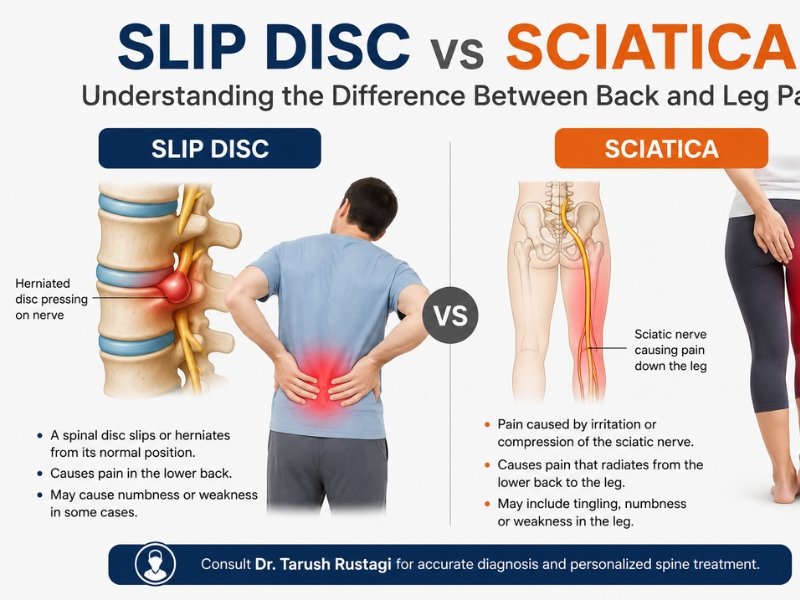
Back pain and leg pain are common spine-related problems. Many people confuse slip disc and sciatica because both conditions can cause lower back discomfort and pain radiating to the legs. However, they are not the same.
A slip disc is a spinal condition affecting the discs between vertebrae. Sciatica is a symptom caused by irritation or compression of the sciatic nerve. Understanding the difference helps in early diagnosis and proper treatment.
For expert spine care and consultation, visit Riva Clinic.
What Is a Slip Disc?
A slip disc is also called a herniated disc or prolapsed disc. It happens when the soft inner portion of a spinal disc pushes outward through a tear in the outer layer.
This condition commonly affects the lumbar spine or lower back.
Common Causes of Slip Disc
- Age-related disc degeneration
- Heavy lifting
- Sudden twisting movements
- Poor posture
- Obesity
- Long sitting hours
- Spine injuries
A slipped disc may press on nearby nerves and cause pain or numbness.
What Is Sciatica?
Sciatica is nerve pain caused by irritation or compression of the sciatic nerve. The sciatic nerve runs from the lower back down to the legs.
Sciatica is not a disease itself. It is a symptom of an underlying spine problem.
Common Causes of Sciatica
- Slip disc
- Spinal stenosis
- Degenerative spine conditions
- Muscle tightness
- Spine injuries
- Bone spurs
Sciatica usually affects one side of the body.
Slip Disc vs Sciatica: Key Difference
The biggest difference is that a slip disc is a condition, while sciatica is a symptom.
Slip Disc
- Problem in the spinal disc
- Causes lower back pain
- May compress nearby nerves
- Can lead to sciatica symptoms
Sciatica
- Pain along the sciatic nerve
- Usually affects buttocks and legs
- Caused by nerve compression
- Often linked to slip disc or spine disorders
Many patients with slip disc also experience sciatica.
Symptoms of Slip Disc
Symptoms depend on the severity and location of the disc problem.
Common Symptoms
- Lower back pain
- Muscle stiffness
- Pain while bending
- Difficulty sitting for long periods
- Numbness in legs
- Tingling sensation
- Weakness in muscles
Pain may worsen with coughing or sudden movements.
Symptoms of Sciatica
Sciatica mainly affects the lower body.
Common Symptoms
- Sharp pain from back to leg
- Burning sensation in leg
- Tingling in feet
- Pain in buttocks
- Leg weakness
- Difficulty walking
- Pain worsening while sitting
Sciatica pain may range from mild discomfort to severe nerve pain.
Warning Signs You Should Not Ignore
Immediate medical attention may be needed if symptoms become severe.
Serious Warning Signs
- Loss of bladder or bowel control
- Severe leg weakness
- Difficulty walking
- Numbness in groin area
- Sudden worsening pain
- Persistent pain despite rest
These symptoms may indicate serious nerve compression.
How Are Slip Disc and Sciatica Diagnosed?
A spine specialist evaluates symptoms and performs physical examination.
Diagnostic Methods
- Neurological examination
- Posture assessment
- Straight leg raise test
- X-rays
- MRI scan
- CT scan if required
MRI is commonly used to identify disc-related nerve compression.
Risk Factors for Slip Disc and Sciatica
Certain lifestyle habits increase the risk of spine problems.
Common Risk Factors
- Sedentary lifestyle
- Poor posture
- Obesity
- Smoking
- Lack of exercise
- Long sitting hours
- Heavy physical work
Maintaining spinal health can help reduce the risk.
Treatment Options for Slip Disc
Treatment depends on the severity of symptoms.
Common Treatment Methods
- Rest and activity modification
- Physiotherapy
- Pain management
- Anti-inflammatory medication
- Core strengthening exercises
- Posture correction
Severe cases may require advanced spine procedures or surgery.
Treatment Options for Sciatica
Sciatica treatment focuses on relieving nerve pressure.
Common Treatments
- Physiotherapy
- Stretching exercises
- Medication
- Hot or cold therapy
- Lifestyle modifications
- Nerve pain management
Early treatment often improves recovery.
Can Slip Disc Cause Sciatica?
Yes. A slipped disc is one of the most common causes of sciatica.
When the disc presses against the sciatic nerve roots, pain may travel from the lower back to the leg. This is called sciatic pain.
Not every slip disc causes sciatica, but many cases are related.
How to Prevent Spine Problems
Simple lifestyle changes can support spine health.
Prevention Tips
- Maintain correct posture
- Exercise regularly
- Avoid prolonged sitting
- Lift weights carefully
- Maintain healthy body weight
- Strengthen core muscles
- Use ergonomic chairs
Regular movement helps reduce spinal stress.
When Should You See a Spine Specialist?
Consult a spine expert if:
- Pain lasts for several weeks
- Leg pain becomes severe
- Numbness develops
- Walking becomes difficult
- Daily activities are affected
Early diagnosis can prevent long-term complications.
Why Choose Dr. Tarush Rustagi for Spine Care?
Dr. Tarush Rustagi specializes in diagnosing and treating spine-related conditions with a patient-focused approach.
Key Highlights
- Comprehensive spine evaluation
- Advanced diagnostic approach
- Personalized treatment plans
- Focus on non-surgical treatment
- Expertise in spine disorders
Timely consultation can help manage symptoms effectively and improve quality of life.
For appointments and expert consultation, visit Riva Clinic Official Website.
Frequently Asked Questions
1. Is sciatica the same as slip disc?
No. Slip disc is a spinal condition, while sciatica is nerve pain caused by nerve compression.
2. Can a slip disc heal without surgery?
Many mild to moderate cases improve with physiotherapy, medication, and lifestyle changes.
3. What does sciatica pain feel like?
Sciatica often causes sharp or burning pain that travels from the lower back to the leg.
4. Can sitting worsen sciatica?
Yes. Long sitting hours may increase nerve pressure and worsen symptoms.
5. When should I seek medical help for back and leg pain?
Consult a spine specialist if pain persists, worsens, or causes weakness or numbness.