
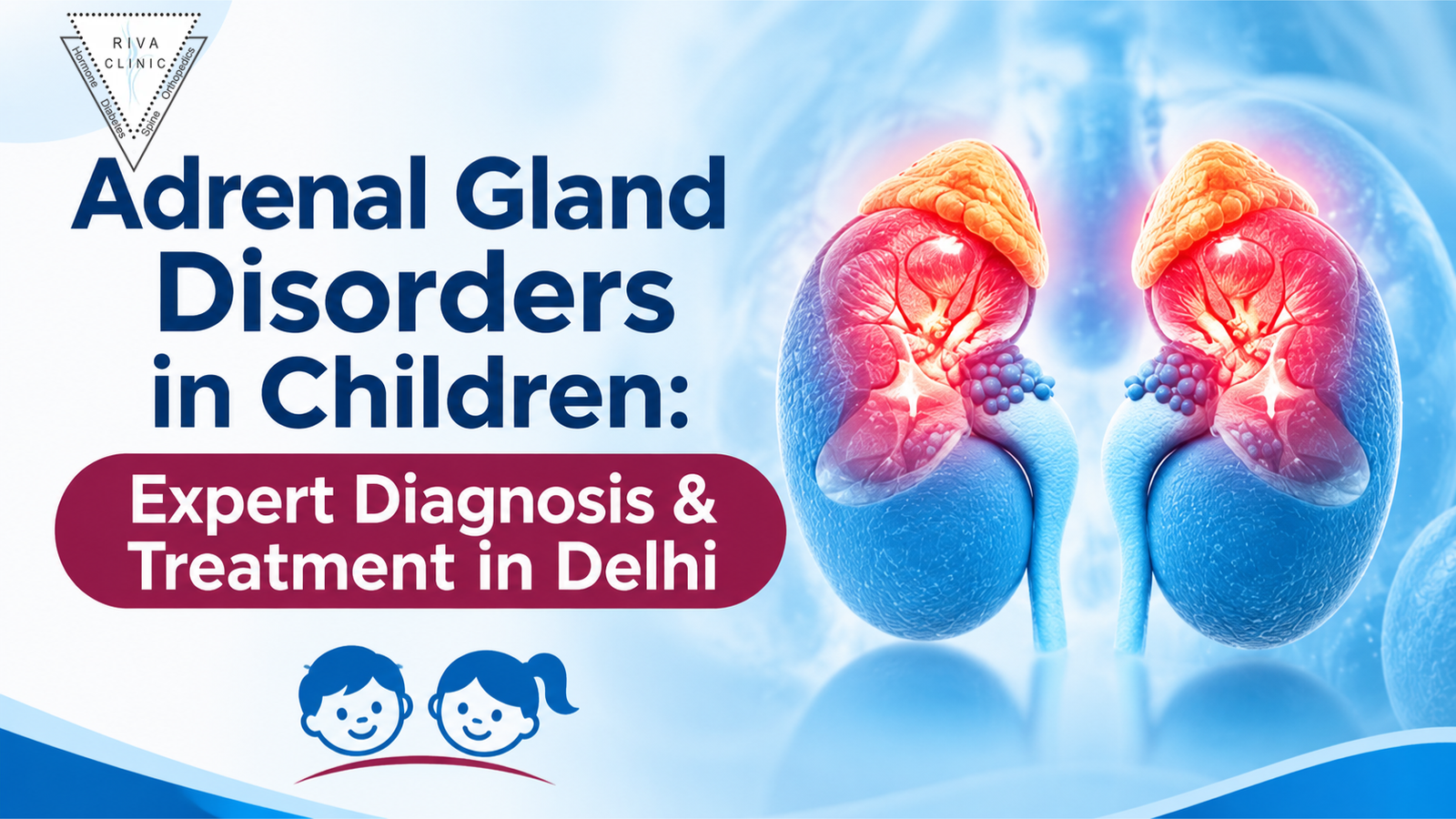
The adrenal glands are small glands located above the kidneys. They produce important hormones that help regulate growth, metabolism, blood pressure, stress response, and the body’s salt and water balance.
When these glands produce too much or too little hormone, children may develop adrenal gland disorders. These conditions can affect energy levels, physical development, blood sugar, blood pressure, and overall health. Some adrenal disorders are present from birth, while others may develop during childhood or adolescence.
Recognising symptoms early is important because certain adrenal conditions require timely medical attention. At Riva Clinic, Pitampura, Delhi, Dr. Vaishakhi Rustagi provides paediatric and adolescent endocrinology care for children with adrenal and other hormone-related concerns.
What Are Adrenal Gland Disorders in Children?
Adrenal gland disorders are medical conditions that affect the production or regulation of hormones made by the adrenal glands.
Each adrenal gland produces several hormones, including:
- Cortisol: Helps the body respond to physical stress, illness, and injury.
- Aldosterone: Helps maintain salt balance, fluid levels, and blood pressure.
- Adrenal androgens: Contribute to certain aspects of sexual development.
An imbalance in these hormones can affect different body functions. The symptoms depend on which hormone is affected and whether the gland is producing too much or too little.
What Are the Common Adrenal Gland Disorders in Children?
Several conditions can affect adrenal gland function. The most important include:
1. Adrenal Insufficiency
Adrenal insufficiency occurs when the body does not produce enough cortisol. In some children, aldosterone production may also be affected.
It may be caused by problems within the adrenal glands or by conditions affecting the pituitary gland, which controls adrenal hormone production.
Possible symptoms include tiredness, muscle weakness, poor appetite, weight loss, nausea, vomiting, low blood pressure, and low blood sugar.
2. Congenital Adrenal Hyperplasia (CAH)
Congenital adrenal hyperplasia is a group of inherited conditions that affect the adrenal glands’ ability to produce certain hormones.
Some children with CAH cannot produce enough cortisol and may also have problems producing aldosterone. The condition can affect salt balance, blood pressure, and normal development.
Severe forms may cause symptoms in newborns, while other forms may become noticeable later during childhood or adolescence.
3. Cushing Syndrome
Cushing syndrome develops when the body is exposed to excessive cortisol over a prolonged period.
In children, it may cause weight gain, slower height growth, a rounded face, muscle weakness, easy bruising, or changes in skin appearance.
Long-term use of corticosteroid medicines can also cause Cushing-like features. Parents should never stop prescribed steroid medication suddenly without medical advice.
4. Other Adrenal Disorders
Less common conditions include adrenal tumours and disorders that cause excessive production of certain adrenal hormones.
Some may cause early signs of puberty, unusual hair growth, high blood pressure, or other hormonal changes. Proper evaluation helps identify the underlying cause.
What Are the Symptoms of Adrenal Gland Disorders in Children?
Symptoms vary depending on the type of adrenal condition. Some children may have mild symptoms, while others may develop serious problems.
Parents should look out for:
- Persistent tiredness or unusual weakness
- Poor appetite or unexplained weight loss
- Repeated nausea, vomiting, or abdominal pain
- Dizziness or fainting
- Unusually low blood sugar
- Darkening of the skin in certain areas
- Salt cravings
- Poor height growth or delayed development
- Early signs of puberty or unusual physical changes
- Unexplained high blood pressure
These symptoms do not automatically indicate an adrenal disorder. However, persistent or unexplained symptoms should be discussed with a healthcare professional.
What Causes Adrenal Disorders in Children?
Adrenal gland disorders can develop due to several reasons.
Common causes include:
- Genetic conditions: Some children are born with inherited conditions such as congenital adrenal hyperplasia.
- Autoimmune conditions: The immune system may mistakenly damage the adrenal glands, affecting hormone production.
- Pituitary gland problems: Reduced production of signals from the pituitary gland can affect adrenal function.
- Infections or other medical conditions: Certain illnesses may damage or affect adrenal gland function.
- Medication-related causes: Long-term corticosteroid use or sudden withdrawal after prolonged treatment can affect the body’s natural cortisol production.
Identifying the cause is important because treatment depends on the specific condition.
How Are Adrenal Gland Disorders Diagnosed in Children?
A paediatric endocrinologist evaluates the child’s symptoms, medical history, physical development, and hormone levels to understand whether the adrenal glands are functioning properly.
The assessment may include:
1. Medical History and Physical Examination: The doctor may ask about symptoms, weight changes, growth patterns, medication use, family history, and physical development.
2. Blood Tests: Tests may measure cortisol, ACTH, electrolytes, glucose, and other hormone levels. The timing of certain hormone tests is important for accurate interpretation.
3. ACTH Stimulation Test: When required, this test helps assess how the adrenal glands respond to ACTH, a hormone that stimulates cortisol production.
4. Additional Hormone Tests: Tests such as 17-hydroxyprogesterone, aldosterone, renin, or adrenal androgen measurements may be recommended depending on the suspected condition.
5. Imaging and Genetic Tests: Ultrasound, CT, MRI, or genetic testing may be advised in selected cases to investigate the underlying cause.
Not every child requires all these investigations. The doctor recommends tests based on the child’s individual symptoms and clinical findings.
What Are the Treatment Options for Adrenal Disorders in Children?
Treatment depends on the type of adrenal disorder, the hormones affected, the child’s age, and the severity of symptoms.
Possible treatment approaches include:
- Hormone replacement: Children with adrenal insufficiency may require medicines such as hydrocortisone to replace cortisol. Some may also need fludrocortisone to support salt and fluid balance.
- Treatment for congenital adrenal hyperplasia: Management may involve carefully prescribed hormone replacement and regular monitoring of growth, development, and hormone levels.
- Management of excess cortisol: Treatment focuses on identifying and addressing the cause of excessive cortisol production.
- Specialist monitoring: Regular consultations and blood tests help assess treatment response and adjust medicines as the child grows.
Children diagnosed with adrenal insufficiency may also need a personalised sick-day plan. Their doctor explains when medication adjustments or emergency treatment may be required during illness.
Never change hormone medication or stop prescribed steroids without consulting the treating specialist.
When Should Parents Consult a Paediatric Endocrinologist?
Consider consulting a paediatric endocrinologist if your child experiences persistent unexplained fatigue, repeated low blood sugar, poor growth, unusual weight changes, salt cravings, or other symptoms suggesting a hormonal problem.
Seek emergency medical care if your child develops severe vomiting, dehydration, extreme weakness, fainting, confusion, or becomes unusually drowsy. These symptoms may indicate an adrenal crisis, which is a medical emergency.
Early assessment can help identify the condition and guide appropriate treatment.
You can learn more about Paediatric Endocrinology Treatment at Riva Clinic and the specialist care available for children with hormonal conditions.
Why Choose Specialist Adrenal Care at Riva Clinic, Delhi?
Adrenal disorders require careful assessment because different conditions can produce similar symptoms. Children also need treatment plans that consider their age, growth, and development.
At Riva Clinic, Pitampura, Delhi, Dr. Vaishakhi Rustagi, Consultant Paediatric and Adolescent Endocrinologist, provides evaluation and management for adrenal disorders and other childhood hormonal concerns.
Parents can also explore Dr. Vaishakhi Rustagi’s profile to learn more about her paediatric endocrinology practice.
For related information, read our guides on thyroid problems in children and signs of hormone imbalance in children.
Frequently Asked Questions About Adrenal Gland Disorders in Children
1. What are the early signs of adrenal gland problems in children?
Early signs may include persistent tiredness, poor appetite, weight loss, vomiting, dizziness, low blood sugar, salt cravings, or changes in skin colour. Symptoms depend on the specific adrenal condition.
2. Can children be born with adrenal gland disorders?
Yes. Conditions such as congenital adrenal hyperplasia are inherited and may be present from birth. Some forms can cause serious symptoms in newborns, while others may become noticeable later.
3. Which doctor treats adrenal gland disorders in children?
A paediatric endocrinologist specialises in hormonal conditions affecting children. They can evaluate adrenal function, recommend appropriate tests, and plan treatment based on the diagnosis.
4. Are adrenal gland disorders in children treatable?
Many adrenal disorders can be managed with appropriate treatment and regular monitoring. Some children require hormone replacement, while others may need treatment directed at excessive hormone production or an underlying condition.
5. What is an adrenal crisis, and is it dangerous?
An adrenal crisis is a serious condition caused by an inadequate supply of essential adrenal hormones during physical stress or illness. It may cause severe vomiting, dehydration, low blood pressure, low blood sugar, and reduced consciousness. It requires immediate emergency medical treatment.
Book a Paediatric Endocrinology Consultation at Riva Clinic, Delhi
Adrenal gland disorders can affect a child’s hormones, growth, energy, and overall development. Recognising unusual symptoms and getting the right medical assessment can help prevent complications and support better long-term health.
At Riva Clinic, Pitampura, Delhi, Dr. Vaishakhi Rustagi provides specialist paediatric and adolescent endocrinology care for adrenal disorders, thyroid problems, growth concerns, puberty-related conditions, and other hormonal issues.
If your child has persistent symptoms or has been advised to undergo an adrenal hormone evaluation, book a consultation for professional guidance.
Contact Riva Clinic today to discuss your child’s symptoms and take the right step towards better hormone health.
Riva Clinic – Hormone & Spine Ortho
Phone: +91 93113-41151 | +91 70421-41515
Email: contact@rivaclinic.com
Website: https://rivaclinic.com/