

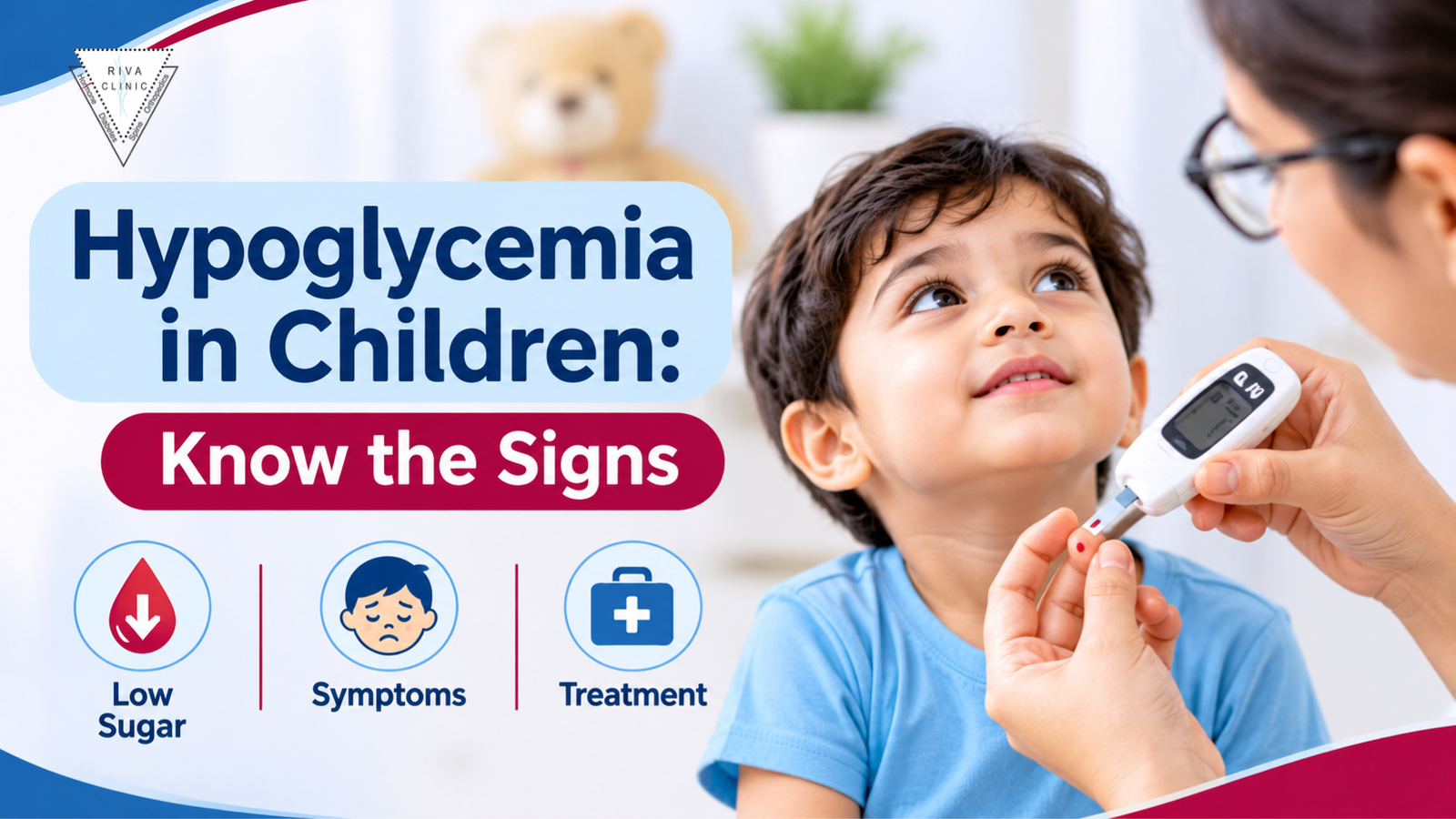
Hypoglycemia in children means that the level of glucose (sugar) in the blood becomes lower than the body needs. Glucose is an important source of energy for the brain and other organs. When blood sugar drops too much, a child may experience sweating, shaking, hunger, irritability, dizziness or unusual tiredness.
Low blood sugar can occur in children with diabetes, but it can also affect children without diabetes. Some episodes are related to missed meals or illness, while repeated episodes may indicate an underlying hormonal, metabolic or medical condition.
Recognising the symptoms early and understanding what to do can help parents respond safely. At Riva Clinic, Dr. Vaishakhi Rustagi provides paediatric and adolescent endocrinology care for children with hormone and metabolic health concerns.
What Is Hypoglycemia in Children?
Hypoglycemia is the medical term for low blood glucose. A blood glucose reading below 70 mg/dL is commonly used as an alert level for children with diabetes, although the interpretation of low blood sugar depends on the child’s age, medical condition and clinical situation.
The brain needs a regular supply of glucose to function properly. If blood sugar falls significantly, the child may develop symptoms ranging from mild hunger and sweating to confusion, seizures or loss of consciousness.
A single episode does not always indicate a serious disorder. However, repeated, unexplained or severe episodes of low blood sugar need medical evaluation.
What Are the Common Symptoms of Hypoglycemia in Children?
The symptoms may develop suddenly or gradually. Younger children may not be able to explain how they feel, so parents should also watch for changes in behaviour.
Common symptoms include:
- Excessive sweating, even when the weather is not hot.
- Shaking or trembling hands.
- Sudden hunger or stomach discomfort.
- Irritability, crying or unusual behaviour.
- Headache or dizziness.
- Pale skin and weakness.
- Tiredness or unusual sleepiness.
- Difficulty concentrating or speaking clearly.
- Confusion or poor coordination.
In severe cases, a child may experience seizures, unconsciousness or difficulty waking up. These are medical emergencies and require immediate help.
Some children, especially very young children, may not show typical warning signs. Unusual sleepiness, poor feeding or sudden behavioural changes can sometimes be the only noticeable signs.
What Causes Low Blood Sugar in Children?
There are several possible causes of hypoglycemia. Identifying the reason is important because treatment depends on the underlying condition.
1. Skipping Meals or Eating Too Little
Children need regular meals and snacks to meet their energy requirements. Skipping breakfast, missing meals or eating insufficient carbohydrates may contribute to low blood sugar, particularly during illness or increased activity.
2. Diabetes and Insulin Treatment
Children with diabetes may experience hypoglycemia if they receive more insulin than their body needs. It can also happen when a meal is delayed, food intake is lower than expected or physical activity increases without adjusting their diabetes management plan.
3. Excessive Physical Activity
Exercise uses glucose for energy. Long periods of sports, running or physical activity without suitable food intake may cause blood sugar to fall, especially in children taking insulin or certain diabetes medicines.
4. Illness, Vomiting or Poor Food Intake
During fever, stomach infections or other illnesses, children may eat less than usual. Vomiting can further reduce food intake and increase the risk of low blood sugar, particularly in younger children.
5. Hormonal or Metabolic Conditions
Certain medical conditions can affect how the body produces, stores or uses glucose. These may include:
- Adrenal hormone deficiency
- Growth hormone deficiency
- Excess insulin production (hyperinsulinism)
- Liver-related conditions
- Inherited metabolic disorders
If a child experiences repeated episodes without an obvious reason, a paediatric endocrinologist may recommend further investigation. Learn more about paediatric endocrinology care at Riva Clinic.
How Is Hypoglycemia Diagnosed in Children?
A doctor evaluates the child’s symptoms, medical history, eating habits and any previous episodes. A blood glucose test helps confirm whether the sugar level is low.
Depending on the situation, the evaluation may include:
- Blood glucose measurement during symptoms.
- Review of meal timings, illness and physical activity.
- Assessment of diabetes medicines, if applicable.
- Blood tests to evaluate insulin and relevant hormones.
- Tests for liver function or metabolic conditions, when indicated.
In selected cases, doctors may recommend specialised investigations. A supervised fasting test may be considered in a hospital setting when clinically necessary. Parents should never try to test a child’s fasting tolerance at home.
What Is the Treatment for Hypoglycemia in Children?
Treatment depends on the child’s age, symptoms, blood glucose level and the underlying cause.
Immediate Response to Mild Symptoms
If the child is awake, alert and able to swallow safely, follow the child’s existing medical or diabetes care plan. This may involve giving a suitable fast-acting source of glucose, such as glucose tablets, glucose gel or a sugary drink.
If a glucose meter is available, check the blood sugar and follow the healthcare team’s instructions for rechecking and further treatment. The amount of glucose needed can vary according to the child’s age and individual care plan.
What If the Child Is Unconscious or Having a Seizure?
Never give food, water, juice or sugar by mouth to a child who is unconscious, having a seizure or unable to swallow safely. This can cause choking.
- Call emergency medical services immediately.
- Place the child on their side if possible and keep the airway clear.
- If the child has prescribed emergency glucagon, use it according to the emergency plan and product instructions.
- Seek urgent medical attention even if the child starts improving.
Long-Term Treatment
If hypoglycemia happens repeatedly, the doctor will focus on treating its cause. Management may include:
- Adjusting insulin or diabetes medication under medical supervision.
- Planning regular meals and snacks.
- Reviewing food intake around exercise.
- Treating hormonal or metabolic disorders.
- Monitoring blood glucose when recommended.
Do not change insulin doses or start supplements without consulting the treating doctor.
When Should Parents Consult a Paediatric Endocrinologist?
A specialist assessment is important if your child has:
- Repeated episodes of low blood sugar.
- Unexplained sweating, shaking or weakness.
- Symptoms after long gaps between meals.
- Frequent episodes during illness or overnight.
- Low blood glucose without a known history of diabetes.
- Poor feeding, unusual sleepiness or unexplained growth concerns.
Seek emergency care if the child has a seizure, becomes unconscious or cannot swallow safely. Do not wait for a routine appointment in these situations.
A paediatric endocrinologist can assess whether the episodes are related to insulin, hormones, metabolism or another health condition. You can also read about child growth and hormone-related concerns and when a child may need specialist assessment.
How Can Parents Help Prevent Hypoglycemia?
Prevention depends on the cause, but some practical steps can help:
- Maintain regular meal and snack timings.
- Avoid long gaps between meals when advised by the doctor.
- Provide balanced meals with suitable carbohydrates, protein and other nutrients.
- Plan food intake around sports and physical activity.
- Follow the prescribed diabetes management plan.
- Inform school staff and caregivers about warning signs and emergency instructions.
- Keep prescribed glucose treatment or emergency medication accessible.
Children with diabetes should have an individualised plan for meals, exercise, glucose monitoring and low blood sugar emergencies.
Frequently Asked Questions
1. What is the main cause of hypoglycemia in children?
Common causes include missed meals, insufficient food intake, excessive insulin or diabetes medication, increased physical activity and illness. Repeated episodes may also be related to hormonal or metabolic conditions.
2. What are the first signs of low blood sugar in a child?
Early signs may include sweating, shaking, sudden hunger, irritability, headache, dizziness and weakness. Some younger children may show unusual crying, poor feeding or sleepiness instead.
3. Can a child without diabetes have hypoglycemia?
Yes. Children without diabetes can experience low blood sugar due to illness, prolonged poor food intake, hormonal problems, excess insulin production or certain metabolic conditions. Repeated episodes should be evaluated by a doctor.
4. What should I give my child if their blood sugar is low?
If the child is awake and can swallow safely, follow the doctor’s plan. Fast-acting glucose, such as glucose tablets, gel or a suitable sugary drink, may be recommended. Never give anything by mouth if the child is unconscious or having a seizure.
5. When should I take my child to a paediatric endocrinologist?
Consult a paediatric endocrinologist if your child has repeated or unexplained low blood sugar, symptoms during fasting or illness, or suspected hormonal or metabolic problems. Severe symptoms such as seizures or unconsciousness require emergency care.
Consult a Paediatric Endocrinologist at Riva Clinic, Delhi
Low blood sugar in children should not be ignored, especially when episodes happen repeatedly or without a clear reason. Early medical evaluation can help identify the underlying cause and guide appropriate treatment.
At Riva Clinic, Pitampura, Delhi, Dr. Vaishakhi Rustagi, Consultant Paediatric and Adolescent Endocrinologist, provides assessment and care for children with hormone, diabetes and metabolic health concerns.
Book a consultation at Riva Clinic if you are concerned about your child’s blood sugar levels or repeated symptoms.
Riva Clinic – Hormone & Spine Ortho
Phone: +91 93113-41151 | +91 70421-41515
Email: contact@rivaclinic.com
Website: https://rivaclinic.com/