
Scoliosis can develop in children and teenagers without causing obvious pain or discomfort. In many cases, parents notice a change in posture, uneven shoulders, or a difference in the way the child stands. Finding these signs early can help parents seek the right medical advice and understand whether the condition needs monitoring or treatment.
Scoliosis means that the spine develops an unusual sideways curve. It can appear during childhood or become more noticeable during the teenage growth years. The condition is different for every child, so proper evaluation is important before deciding what should be done.
At Riva Clinic, Dr. Tarush Rustagi provides expert evaluation and guidance for children and teenagers with spine and posture concerns.
What Is Scoliosis in Children?
Scoliosis is a condition in which the spine curves sideways instead of following a relatively straight alignment. The curve may be mild and difficult to notice at first, or it may become more visible as a child grows.
Scoliosis is commonly noticed during the years when children experience rapid growth. However, it can also be identified at younger ages.
The important point is that not every uneven posture means scoliosis. A proper examination is needed to understand whether a child has a spinal curve and whether it requires further attention.
What Are the Early Warning Signs of Scoliosis?
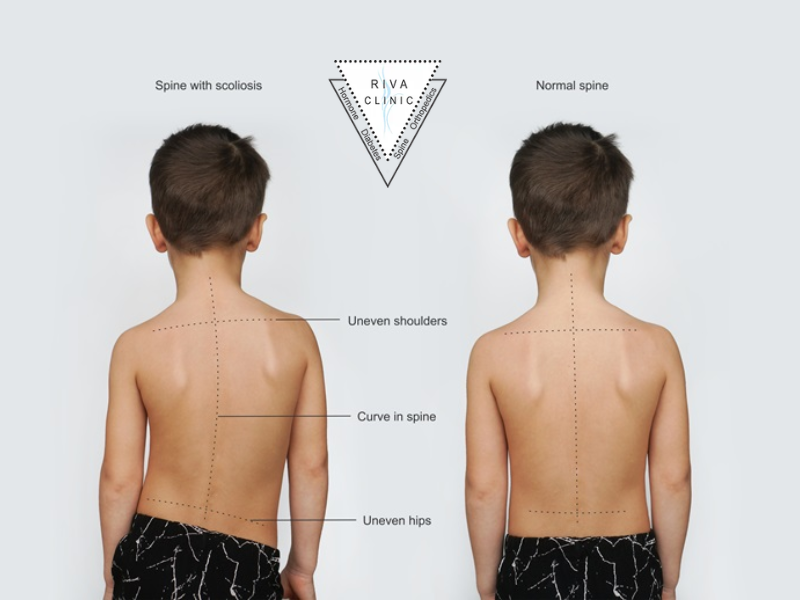
Parents may notice scoliosis while helping their child get dressed, seeing them from behind, or observing their posture.
Common signs include:
- One shoulder appearing higher than the other
- Uneven shoulder blades
- One side of the waist looking different from the other
- Clothes appearing to hang unevenly
- One hip appearing higher than the other
- The body leaning slightly to one side
- A visible curve in the back
- Changes in posture while standing or walking
Some children may also complain of back discomfort, although scoliosis does not always cause pain.
If you notice one or more of these changes, it is better to get your child evaluated rather than assuming it is simply poor posture.
Why Is Early Evaluation Important?
Children and teenagers go through important stages of physical growth. A spinal curve may change as the child grows, so keeping an eye on it can be helpful.
Early evaluation allows a doctor to understand:
- Whether scoliosis is actually present
- How noticeable the spinal curve is
- Whether the curve may change as the child grows
- Whether regular monitoring is enough
- Whether treatment should be considered
Early attention does not necessarily mean that a child will need treatment. In many situations, the first step is simply understanding the condition and monitoring the child’s growth.
What Causes Scoliosis in Children?
In many children and teenagers, the exact cause of scoliosis is not known. This type is often identified during the growing years.
Other forms may be associated with certain conditions affecting the bones, muscles, or nervous system. Some children may also develop spinal curvature because of conditions present from birth.
Importantly, scoliosis is not usually caused by carrying a school bag, sitting incorrectly, or normal childhood activities.
Parents should therefore avoid blaming themselves or the child. The focus should be on proper evaluation and appropriate care.
How Is Scoliosis Diagnosed?
The first step is usually a detailed discussion about the child’s growth, posture, symptoms, and medical history.
The doctor may then examine the child’s back and posture while standing and moving. If further assessment is required, the doctor may recommend an appropriate scan or other examination.
This helps the doctor understand the position and shape of the spinal curve and decide what should happen next.
The diagnosis should always be based on professional evaluation rather than photographs or posture comparisons alone.
Does Every Child With Scoliosis Need Treatment?
No. Treatment is not automatically required for every child with scoliosis.
The approach depends on several factors, including the child’s age, growth stage, symptoms, and the nature of the spinal curve.
For some children, regular follow-up may be recommended to see how the spine changes during growth.
For others, additional treatment may be considered if the curve is becoming more noticeable or if there are other concerns.
The goal is not simply to treat the curve. The goal is to protect the child’s overall spinal health and support normal daily activities as much as possible.
When Should Parents See a Spine Specialist?
Parents should consider seeking medical advice if they notice:
- A persistent difference in shoulder height
- Uneven hips or waist
- A visible curve in the back
- A child consistently leaning to one side
- A noticeable change in posture
- Back discomfort that continues or becomes frequent
- A previously identified spinal curve that appears to be changing
A consultation can provide clarity and prevent unnecessary worry.
If you are looking for scoliosis evaluation for a child or teenager in Delhi, an experienced spine specialist can assess the condition and explain the next appropriate step.
Scoliosis During the Teenage Years
Teenage years are an important period because children can experience rapid growth during this time. A spinal curve that was difficult to notice earlier may become more visible during a growth phase.
Parents should therefore pay attention to changes in posture, shoulder level, waist symmetry, and the appearance of the back.
Teenagers may also be less likely to tell their parents about changes they notice themselves. Simple conversations about posture and physical changes can help parents identify concerns earlier.
Most importantly, avoid frightening the child. A calm evaluation can help them understand what is happening and what can be done.
Can Scoliosis Affect Everyday Life?
Many children with scoliosis continue their normal school, social, and physical activities.
The impact can vary from one child to another. Some children may have no noticeable symptoms, while others may experience discomfort or concerns about their appearance.
Emotional support is also important, especially for teenagers who may feel self-conscious about changes in their posture.
Parents can help by listening to their child, avoiding negative comments about appearance, and following the advice provided by their healthcare professional.
What Should Parents Do If They Suspect Scoliosis?
The first step is simple: do not panic and do not try to diagnose the condition at home.
Instead:
- Observe the changes you have noticed.
- Speak with your child’s doctor or a spine specialist.
- Get an appropriate evaluation.
- Understand whether monitoring or treatment is recommended.
- Follow the suggested follow-up schedule.
Every child is different, so the right approach should be based on individual evaluation.
Suggested Internal Links
- Minimally Invasive Spine Surgery in Delhi → https://rivaclinic.com/treatment/minimally-invasive-and-endoscopic-spine-surgery-services/
- Riva Clinic → https://rivaclinic.com/
- Spine Endoscopy Treatment in Delhi → https://rivaclinic.com/treatment/spine-endoscopy-treatment-services/
Frequently Asked Questions About Scoliosis in Children
Is scoliosis common in children?
Scoliosis can occur during childhood and adolescence. It is often noticed during the growing years, particularly around periods of rapid growth.
Can scoliosis occur without pain?
Yes. Many children with scoliosis may not experience back pain. Changes in posture or uneven shoulders may be the first noticeable signs.
How can I tell if my child has scoliosis?
Parents may notice uneven shoulders, uneven hips, changes in the waistline, or a visible curve in the back. However, these signs alone cannot confirm scoliosis. A medical evaluation is needed.
Does scoliosis always get worse?
Not necessarily. The way scoliosis changes can vary depending on the child and their stage of growth. Regular medical follow-up can help determine whether the curve is changing.
Does every child with scoliosis need treatment?
No. Some children may only need observation and regular follow-up, while others may require treatment. The decision depends on the individual child’s condition.
Can scoliosis be treated in children?
Yes, there are different approaches to managing scoliosis depending on the child’s age, growth, symptoms, and spinal curve. A spine specialist can explain which approach is appropriate.
Should parents wait until the child has pain?
No. Scoliosis may not cause pain, especially in the early stages. If you notice persistent changes in posture or spinal alignment, it is better to seek an evaluation.
When Should You Seek Expert Advice?
A change in your child’s posture does not always mean something is seriously wrong. However, persistent changes should not be ignored.
If you have noticed uneven shoulders, an unusual back curve, uneven hips, or changes in your child’s posture, consider getting an expert evaluation.
At Riva Clinic, Dr. Tarush Rustagi provides spine care and guidance for children, teenagers, and adults. A timely consultation can help parents understand the condition clearly and decide what to do next.